





The changes in hormone levels in pregnant women are truly profound. Most men find it difficult to fully comprehend what is causing all these changes from mood swings to constipation, extra sleep to food cravings.
Quite simply, it is the effect of various hormones that is the main contributor to these changes in you, but more than that, it’s these very same hormone changes that enable you to carry the baby for nine months and assist it to develop.
Progesterone Production

Progesterone is found in relatively low levels for the first part of a woman’s menstrual cycle. It is produced by cells within the ovaries called “granulosa cells” which surround the tiny follicles that will mature to become ovulated eggs.
After ovulation, the “yellow body” (corpus luteum) that released the mature egg into the fallopian tube begins to secrete high levels of progesterone from the granulosa cells within it. This hormone stimulates the growth of rich blood vessels that supply the uterus lining (endometrium). It also causes the expansion of tiny glands in the endometrium that produce a fluid (uterine fluid) that can be used to nourish sperms and embryos that find their way into the uterus. These tiny glands are created by the estrogen hormone and the progesterone takes over the job of making them mature into “feeding structures”.
The production of progesterone will normally drop away after about 10 days beyond ovulation. It is this sudden reduction in the hormone that will prompt the menstruation period to begin due to the reduced oxygen supply from the blood vessels that were previously encouraged to grow by the progesterone hormone.
If however, the released egg is fertilised and manages to embed itself into the uterine wall, then the hormone b-HCG is released from the developing placenta, which has the effect of telling the “yellow body” to continue to produce both progesterone and estrogen. This in turn prevents the start of the menstrual cycle and stops further eggs from being released.
The ovaries continue to produce progesterone (and estrogen) during the first eight to nine weeks until the placenta begins to reduce the amount of b-HCG secreted, which is a signal to the “yellow body” that it is capable of producing these hormones for itself and requires less help.
The Role of Progesterone

The placenta continues to produce both progesterone and estrogen for the duration of the pregnancy and the levels get higher and higher right up to just before the birth.
During the pregnancy, the progesterone is needed in the following ways, (mostly in conjunction with estrogen):
- Makes the endometrium develop and secrete fluids after being primed by estrogen.
- Maintains the functions of the placenta and fights off unwanted cells near the womb that could cause damage to the placenta or foetus.
- Keeps the endometrium in a thickened condition.
- Stops the uterus making spontaneous movements.
- Stimulates the growth of breast tissue.
- Prevents lactation until after the birth (with estrogen).
- Strengthens the mucus plug covering the cervix to prevent infection.
- Strengthens the pelvic walls in preparation for labour.
- Stops the uterus from contracting (thus keeping the baby where it is)
At the end of the pregnancy, the levels of progesterone secreted by the placenta drop off. It is this action that stimulates the beginning of the contractions that will lead to birth.
The effects on a woman due to raised levels of progesterone can include any or all of the following:
- Constipation
- Heartburn
- Runny and irritable nose
- Eyesight problems (blurring or headaches)
- Increased kidney infection risk.
A minimum level of about 10ng/ml is required to sustain a pregnancy through the very early stages. It is because of this that doctors can measure the levels of progesterone in the blood to assist in the diagnosis of abnormal pregnancies such as ectopic pregnancy.
Supplements of natural progesterone are sometimes prescribed as a fertility treatment or to assist in reducing the risk of miscarriage. This is found in the form of a cream that is rubbed into the abdomen and thighs or else it arrives as a vaginal suppository or an injection (tablets don’t work very well).
The Role of Estrogen (Oestrogen)
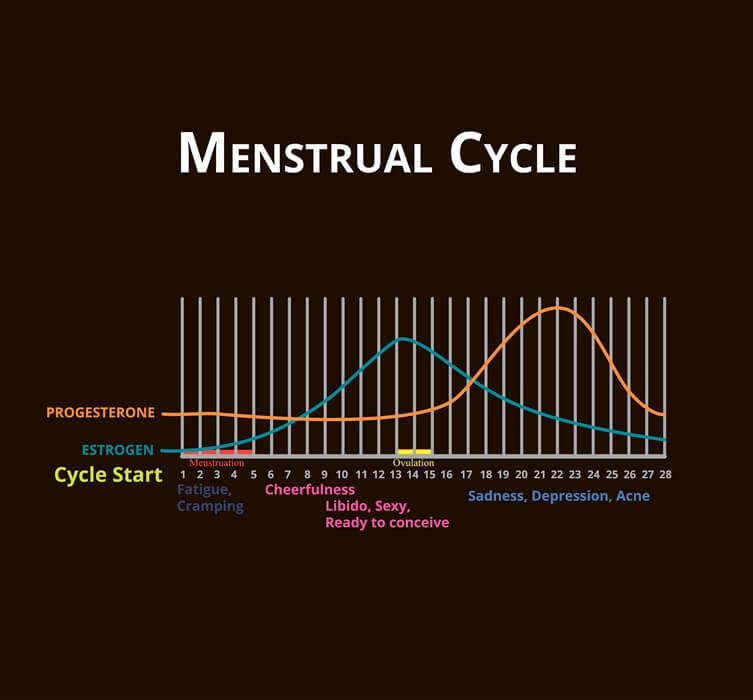
Estrogen is the name given to a family of ovarian hormones which all have similar characteristics. During the female menstruation cycle, the production of estrogen is controlled by the hormone LH (Leutenising Hormone) both indirectly and directly. The “Yellow Body” (corpus lutem) is directly stimulated by LH to produce estrogen, whereas, before ovulation, the granulosa cells of the follicle are stimulated to produce estrogen via an enzyme called aromatase.
As with progesterone, estrogen is produced by the placenta throughout pregnancy and the levels increase steadily until birth. Each hormone plays a vital and complex role during pregnancy and many of them interact with each other to stimulate various parts of the process.
One role of estrogen during pregnancy is to regulate the production of progesterone over the full term. As estrogen is produced by the placenta, progesterone production is stimulated and regulated.
Apart from this, estrogen plays a very important role in the development of the foetus. Without estrogen, the lungs, kidneys, liver, adrenal glands and other organs would never be triggered into maturation. In fact, the placenta itself would never grow and operate properly if not for estrogen.
The following list shows some other known jobs undertaken by estrogen:
- Triggers the maturation of reproductive organs
- Help in the development of sexual characteristics
- Assists in the lactation process
- Regulates bone density in a foetus
- Maintains the endometrium during pregnancy
- Promotes blood flow within the uterus
- Maintains, regulates and triggers the production of other hormones
- Protects unborn baby girls from the effects of androgens in the mother’s system. (Androgens are substances that have a masculinising effect).
The main external effect on women of the increased levels of estrogen during pregnancy is the appearance of rashes or red blotches on the skin. It is this effect that is often described as the ‘glow’ of pregnancy.
Summary of the Other Hormones

The following list gives a quick summary of the primary function of the other pregnancy hormones that have not been discussed up to now:
- HSC (Human Chorionic Somatomammotropin) or HPL (Human Placental Lactogen) – This hormone is regulated by estrogen and is produced within the placenta. It plays a part in the development of the foetus and helps the breasts develop the glands that will be required for breastfeeding. It also reduces the level of glucose consumed by the mother. The levels increase steadily from three weeks gestation to a limit in the last month of pregnancy.
- Calcitonin – This protein-based hormone is used to regulate bone development and to stop calcium from transferring from the bones into the blood system.
- Thyroxine (T4 & T3) – This is needed for the development of the central nervous system. It also increases oxygen consumption and develops the ability of the foetus to metabolise proteins and carbohydrates. On top of this, it interacts with growth hormones to regulate and stimulate the baby’s growth. Insulin – Helps the baby to store food in its body and to regulate glucose levels.
- Insulin – Helps the baby to store food in its body and to regulate glucose levels.
- Relaxin – Encourages the cervix and the pelvic muscles to relax, thus helping with labour and birth.
- Oxytocin – This hormone is released as a response to stretching the cervix or stimulation of the nipples. It has the effect of making the uterus contract so that birth happens rapidly. It also stimulates the mammary glands to produce milk. High levels of progesterone will prevent oxytocin from having an effect. Only when progesterone levels drop close to the birth will the effects of this hormone be felt.
- Erythropoietin – Produced in the kidneys, this hormone looks after bone marrow and red blood cell production.
- Cortisol – Helps the baby use various foods properly within the body.
- Prolactin – This hormone is made by the baby’s kidneys and is reduced about a week after birth. The levels remain high within the mother’s blood for about two weeks after birth. Prolactin is important for the regulation of the mother’s metabolism during pregnancy and assists in the stimulation of immune system cell growth. It helps prepare the breasts for breastfeeding and promotes the growth of the baby.