






Thalia is 36 weeks pregnant and for the last few weeks, she’s been measuring large for dates. Her doctor sent her for an ultrasound, which revealed she has more amniotic fluid than some mothers do. A normal range of fluid at this stage of pregnancy is measured as between 5 and 25 centimeters or about 800-1000 mL. If the measurement is over 25, it’s called polyhydramnios and sometimes there are increased risks for mum and baby associated with that condition.
Thalia is measuring 24 centimeters of fluid, yet her doctor has already told her she has polyhydramnios and Thalia is scared. Essentially we have two questions here:
- Does Thalia have polyhydramnios?
- Is there something to worry about?
Polyhydramnios only occurs in about 1% of pregnancies. Technically, Thalia isn’t in that 1% because 24 cm of amniotic fluid is still within normal range. Will it go higher? Maybe. But it might also go lower. The important thing is that her doctor is keeping an eye on things. The bad thing is, her doctor has freaked Thalia out and she thinks bad things are happening to her and her baby. That is pretty sad because, at this point, Thalia is normal.
About 50 – 65% of the time, nobody knows what causes a woman to develop polyhydramnios. The rest of the time, they can pinpoint it to one of these conditions.
Conditions that Impact Polyhydraminos

- Birth defects involving baby’s ability to swallow or kidney function. It’s baby’s ability to swallow and process fluid through the kidneys that regulates the amount of fluid in the uterus.
- Diabetes – Some mums with diabetes might have increased levels of fluid.
- Rh Incompatibility – A mismatch between Mum’s blood and baby’s blood.
- Twin-to-twin transfusion syndrome (TTTS) – When one identical twin gets too much blood flow and the other gets too little.
- Problems with the baby’s heart rate
- An infection in the baby
Let’s rule a few things out for Thalia:
- She didn’t mention twins so it’s not TTTS.
- Her blood type was checked early in pregnancy and if she is RH negative, her doctor will give her a Rhogam shot to make sure she and her baby won’t have incompatibility problems.
- She didn’t mention diabetes.
- If there is a problem with baby’s heart rate it would most likely show up on ultrasound or monitoring. She didn’t mention that.
- Could the baby have swallowing or kidney problems or infection? It’s possible, but not likely.
Therefore, we’re guessing Thalia’s in the 50-65% for whom there’s no specific reason why she might have extra fluid.
What Are The Risks of Polyhydramnios?
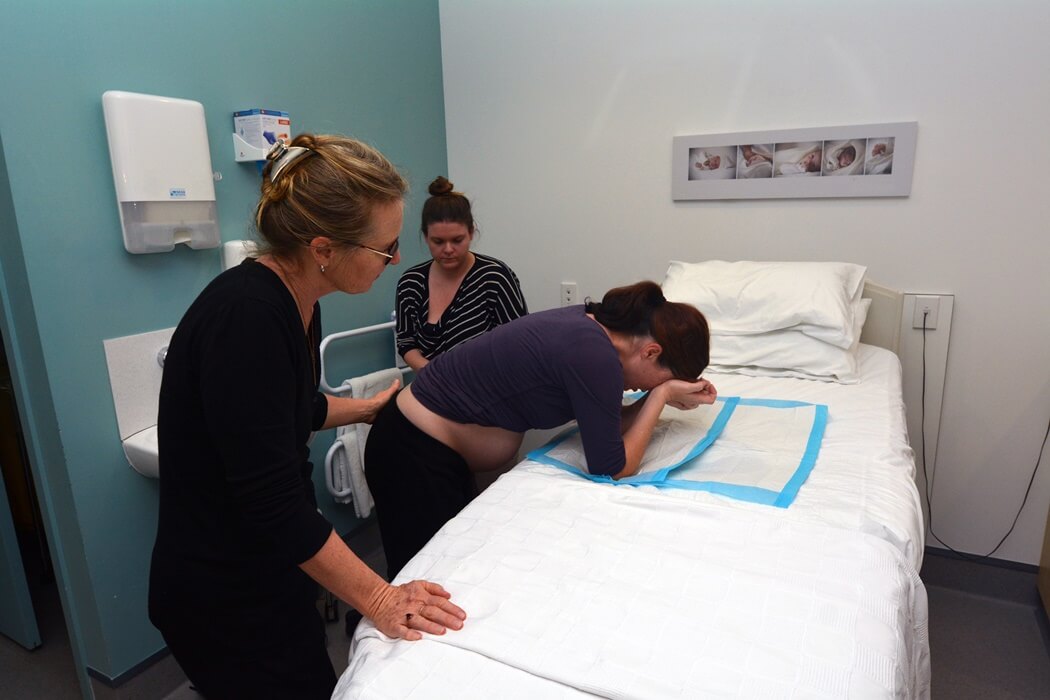
What could happen to Thalia or her baby from having polyhydramnios? The worst-case scenario is there’s an increased risk of stillbirth. In normal populations, two out of 1,000 babies are stillborn. With polyhydramnios, it’s four out of 1,000, but that still means that 996 of those 1000 are born alive.
Polyhydramnios increases risks for premature rupture of membranes and/or preterm labour, which could mean that Thalia might deliver her baby earlier than 37 weeks. Thalia’s already close to 37 weeks right now, though, and most babies born at 37 weeks do amazingly well. Thalia does mention that her baby is very active, which generally indicates a healthy baby.
Polyhydramnios sometimes means that babies can wiggle their way into a weird birthing position. Instead of assuming the normal late-pregnancy, head down, ready-to-be-born position, polyhydramnios increases risks for breech or transverse positions, which increase chances for C-section.
During labour itself, there’s an increased risk the umbilical cord could get pinched or pushed out before the baby, which can be very dangerous. Since Thalia will be delivering in a hospital, she’ll be monitored and her doctor will take measures to make sure her baby is safe.
There’s also increased risk for placental abruption, which means the placenta could separate before the baby is born and increased risk for postpartum haemorrhage. Again, dangerous, but Thalia’s medical team will be on the look out and will take care of her. While these all sound scary, and they’re all possible when mum has polyhydramnios, they’re also very unlikely.
The Labour Nurse’s Take

Does Thalia have reason to be scared? Not at all. At this point, Thalia doesn’t actually have polyhydramnios. Her doctor is just worried she might develop it. Chances are far better she won’t develop it at all. Our thoughts for Thalia: It’s natural to go to fear-land when one hears unsettling possibilities, but it’s a mighty poor place to spend the end of your pregnancy. So what are the chances that everything will be OK?
Answer is this: Really, really, really good. Your baby is close to term, your amniotic fluid is still in normal range, and you’re being taken care of by a trained healthcare team that knows what to do. Thalia is going to be just fine.