




Despite being found in many homes, and often being promoted as developmentally beneficial, these toys that we’ve listed down; according to Paediatric Occupational Therapist, Emma Hubbart – don’t actually help your little one in any way and instead may lead to developmental delays if they’re overused. They also pose safety-risk which is something you should consider as well before deciding whether or not to use them.
This is often because they limit movement and hold your baby in a single position for extended periods of time they can potentially lead to developmental delays. Some of these toys even hold our babies in positions that are know to increase the risk of them developing hip dysplasia and other developmental conditions. So, let’s get right into it!
#1 Baby Floor Seat
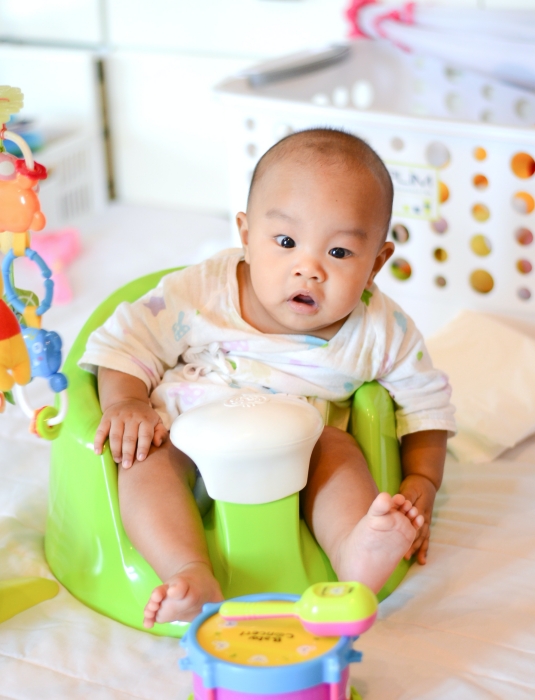
Baby Floor Seat are small devices that supports a baby to sit up before they are capable of sitting independently. They are typically used for babies around 3 to 6 months of age. It is often promoted as a tool to teach a baby how to sit. However, they don’t actually help babies learn the skills of sitting and it also does not speed up that process.
The snug fit of the seat provides support to their hips and trunk muscles, which eliminates the baby’s need to activate their tummy and back muscles to sit up right and stop the baby from building that trunk control and pelvic stability which is required for them to sit independently.
There’s also been cases of babies getting injured, including skull fracture when using baby floor seats by arching backwards, leaning forward or to the side or rocking in that floor seat. Risk of injury is also even higher once baby is able to independently sit up and still placed in a floor seat, as a way to keep them in one spot. This is because these children are a lot more mobile and they will try to get out of the seat by moving about, which can result in them falling.
#2 Baby Jumper or Bouncers
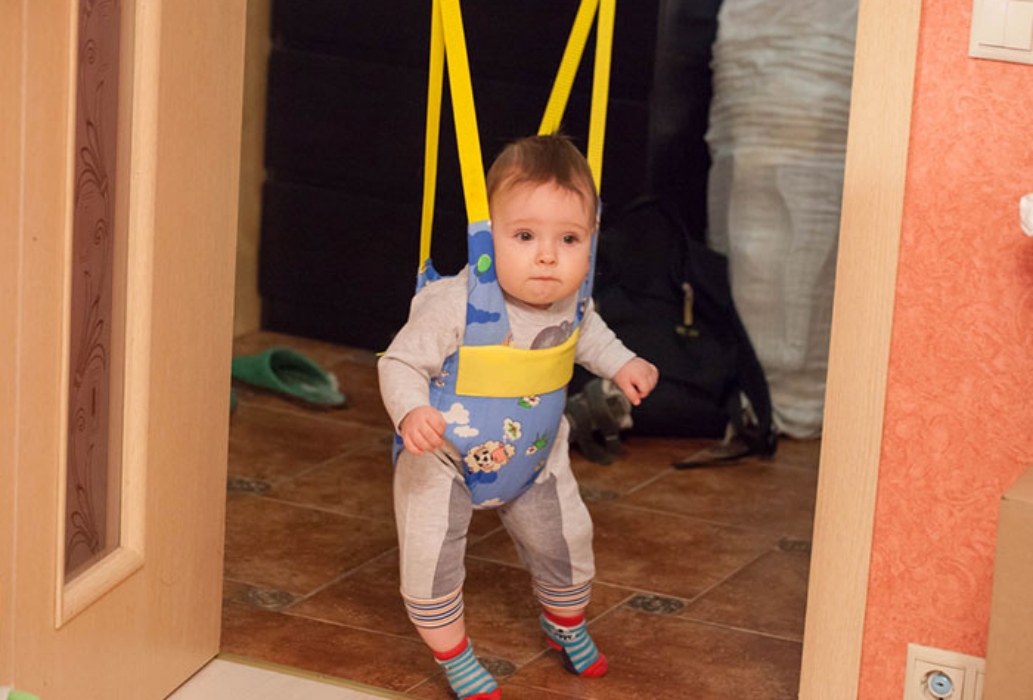
Although some babies may find this enjoyable, baby jumpers can negatively affect a baby’s development and place them at risk of sustaining injuries.
Babies are often placed in baby jumpers aged 4 months and up. Generally until 8 months of age, babies do not have the strength or muscle control to stand up, let alone control their body movements when they are bouncing quickly. Because they do not have this skill, babies will tend to lean forward, instead of standing upright.
Baby Jumpers also teach babies to use their toes to push up. When done too often, it can encourage them to have pointed toes all the time, and this can lead to shortening of the calf muscles. This learned movement of constantly being on their toes is actually counter productive to heel strike action that is required for independent standing and walking, therefore can delay the development of your baby reaching these milestones.
#3 Exersaucer or Stationary Play Centre

Depending on the exersaucer being use, the baby’s feet may directly hang and rest on the floor or they might rest on a saucer shaped bottom. Most of the time, babies are placed in an exersaucer before they can actually stand by themselves, because once they can stand you obviously don’t need this piece of equipment.
Similar to a baby jumper, when they are placed in the exersaucer before they have the strength to stand independently, a baby will usually rest their tummy at the front of the slung seat. This results in their hips tilting forward, which results in poor alignment of the body and may result in the baby developing an abnormal way of moving. This will make it more difficult for the baby to learn to stand and walk.
#4 Baby Walker
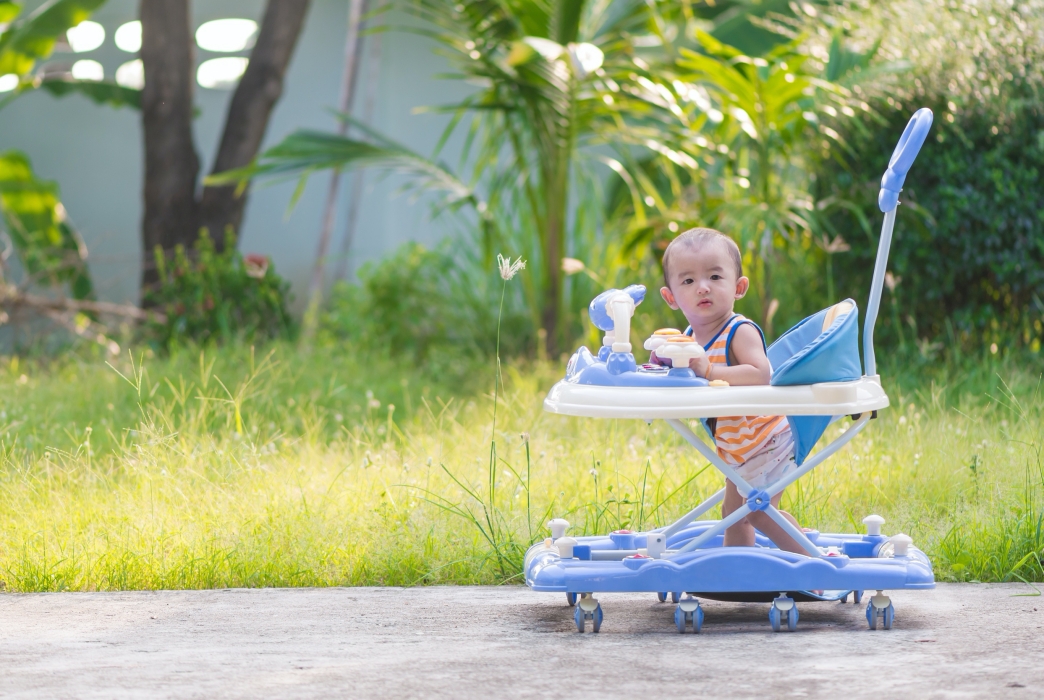
Baby walkers are generally not safe because it allows infants to move quickly around the house and grab things that are normally out of reach. Studies show that an infant in a baby walker can move more than 3 feet or 1 meter for second. Due to this, parents are usually unable to respond quickly enough to prevent injuries.
Most common injuries when using a baby walker includes:
- head and neck injuries
- burns and scalds
- choking
- finger and toe injuries or breaks
- poisoning from cleaning products
Besides that, baby walkers can also stop a baby from learning the proper mechanisms for walking. The American Academy of Paediatric has clearly stated that baby walkers do not promote independent walking and stress that it can delay normal development and motor control.
In Canada, the sale of baby walkers has been banned since 2004.