





Malaysia is witnessing a silent epidemic: adolescent obesity is on the rise, threatening the health and futures of its youngest generation.
In response, Novo Nordisk Pharma (Malaysia) and the Galen Centre for Health & Social Policy hosted a landmark forum titled “Addressing the Adolescent Obesity Burden: Collaborative Solutions for a Healthier Malaysia” on 6 August 2025 at the Hilton Kuala Lumpur.
Over 50% of adults in Malaysia are living with overweight or obesity1. This makes the country one of the most affected in Southeast Asia. Alarmingly, the trend is now reflected among younger Malaysians. The latest National Health and Morbidity Survey (NHMS) 2024 found that 13.6% of adolescents in Malaysia are living with obesity2. Without urgent intervention, these numbers are expected to rise, putting increasing pressure on families, communities, and the healthcare system.

As Malaysia continues to grapple with one of the highest childhood obesity rates in Southeast Asia3, this event aimed to spark a nationwide conversation rooted in compassion, evidence, and shared responsibility. The forum also explored critical issues such as early intervention in schools, stigma reduction, pharmacological innovation and the importance of coordinated, cross-ministerial action to protect the health and dignity of Malaysia’s next generation.
The event also marked the public presentation of the Galen Centre’s new policy report, “Addressing Obesity in Children and Adolescents in Putrajaya”, developed in collaboration with Novo Nordisk Pharma (Malaysia). The report outlines evidence-based recommendations for national and local stakeholders, focusing not only on early screening, integrated school programmes, and de-stigmatisation of care pathways, but also emphasising the urgent need for greater investment in the treatment of obesity among children and adolescents. It highlights critical gaps in Malaysia’s current approach, including limited multidisciplinary care, a lack of insurance coverage for treatment, and insufficient recognition of obesity as a chronic disease.
The report also calls for structured treatment modalities, from lifestyle interventions to pharmacotherapy, and stresses the importance of involving families throughout the treatment journey to ensure sustainable, long-term outcomes.
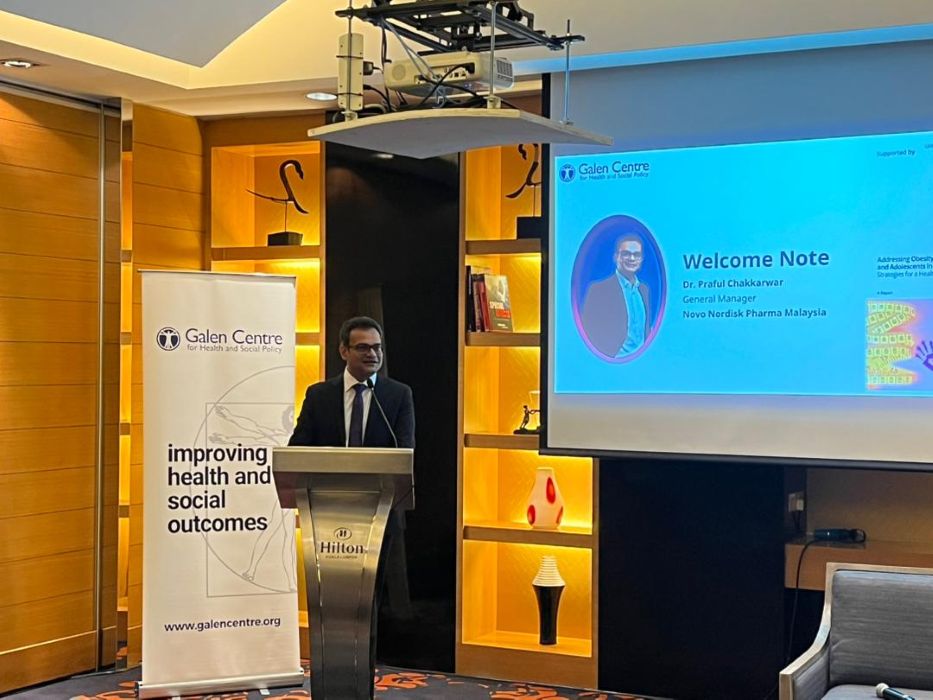
Dr. Praful Chakkarwar, General Manager of Novo Nordisk Pharma (Malaysia), delivering his welcome remarks to kick off the event.
Obesity is not a choice, it is a complex disease,” said Dr. Praful Chakkarwar, General Manager of Novo Nordisk Pharma (Malaysia). “Inspired by the government’s initiatives and recognising the challenges faced in our society, Novo Nordisk is proud to lead the way in addressing obesity as a serious chronic condition. As global healthcare leaders, we are committed to collaborating with healthcare providers, communities, and stakeholders to build a robust ecosystem. This ecosystem will not only aim to advance early intervention and drive policy change but will also pursue the goal that individuals living with obesity, especially our youth, have access to holistic and long-term care solutions.”
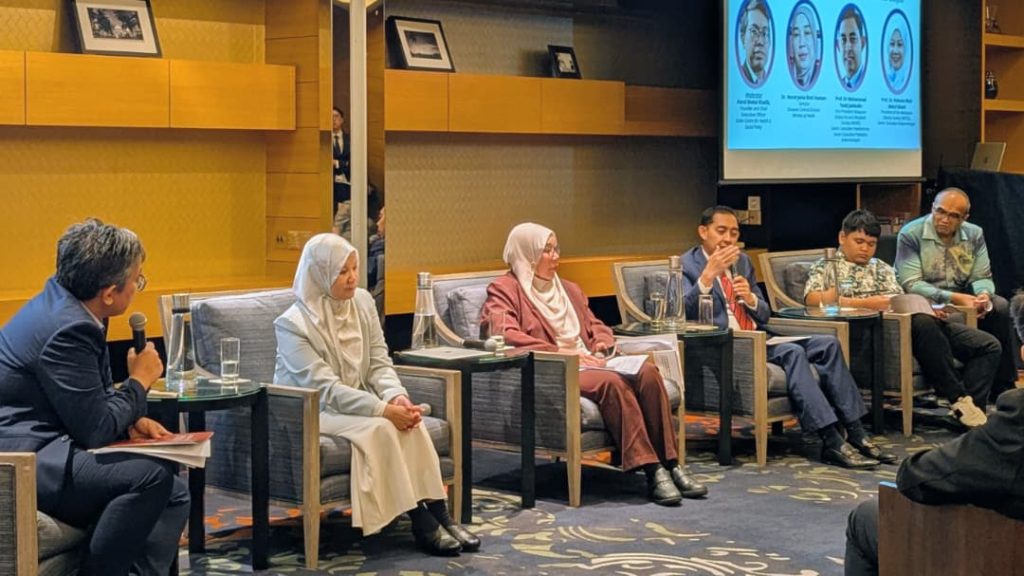
(From left: Moderator Azrul Mohd Khalib, Founder and CEO of the Galen Centre for Health & Social Policy; Prof. Dr. Rohana Abdul Ghani, President of the Malaysian Obesity Society; Dr. Noraryana Binti Hassan, Director of Disease Control Division, Ministry of Health Malaysia; Prof. Dr. Muhammad Yazid Jalaludin, Vice President of MEMS, and Muhammad Mikhael Qaiser, patient advocate with his father.)
The panel discussion was moderated by Mr. Azrul Mohd Khalib, CEO of the Galen Centre, and featured insights from some of Malaysia’s foremost experts, including:
- Prof. Dr. Rohana Abdul Ghani, President of the Malaysian Obesity Society (MYOS) and Senior Consultant Endocrinologist
- Prof. Dr. Muhammad Yazid Jalaludin, Vice President of the Malaysian Endocrine and Metabolic Society (MEMS), Senior Consultant Paediatric Endocrinologist
- Dr. Noraryana Binti Hassan, Director, Disease Control Division, Ministry of Health
- Muhammad Mikhael Qaiser, who shared a powerful personal journey of navigating obesity and stigma in adolescence
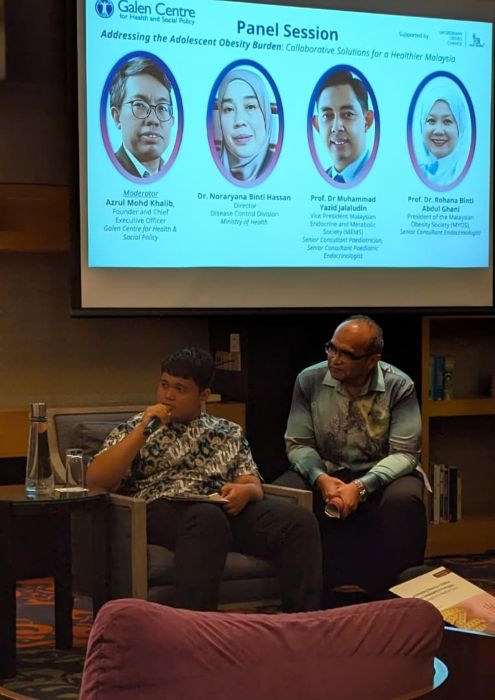
Patient advocate Muhammad Mikhael Qaiser shares his lived experience during the panel session, offering a personal perspective on adolescent obesity.
A standout moment of the event came from Muhammad Mikhael Qaiser, who offered a deeply personal perspective on the emotional toll of growing up with obesity.
“People saw my size, not my struggle. I wasn’t lazy. I needed support, not shame. Today, I speak so that no other child feels alone in this,” they said, drawing heartfelt applause from the audience. – Muhammad Mikhael Qaiser
Prof. Dr. Rohana Binti Mohd Ghani
Prof. Dr. Rohana Abdul Ghani, President, Malaysian Obesity Society (MYOS) and Senior Consultant Endocrinologist, shared that, “Adolescent obesity is not merely a matter of lifestyle choices, it is a complex, chronic disease that requires a clinical, community, and policy response. At MYOS, we advocate for better education and increased awareness among our healthcare providers, that will lead to better health literacy within the community, earlier screening and detection of living with overweight/obesity and its complications, and the de-stigmatisation of obesity so that young people can receive the appropriate care they need, early before they grow up into sick adults, without shame or delay. This issue cannot be solved in silos. A coordinated, multi-disciplinary approach is essential to either reverse or at least to slow down the trends we are seeing.”
This was supported by Prof. Dr Muhammad Yazid Jalaludin, Vice President Malaysian Endocrine and Metabolic Society (MEMS), Senior Consultant Paediatrician, Senior Consultant, who noted;

Dr Noraryana
“We are seeing more children and adolescents presenting with lifestyle-related conditions such as Type 2 diabetes, high blood pressure and fatty liver disease. These conditions were once largely confined to adults. This is a red flag. The NHMS 2024 shows that 13.6% of children and adolescents are living with obesity, while 14.4% are overweight4. These numbers are deeply concerning. Obesity in children is not just about excess weight; it signals an early onset of serious, long-term health risks. As clinicians, we urgently need more robust, multisectoral support systems from schools and parents to community health and policy stakeholders to intervene earlier, more consistently and more effectively.”
The report’s findings were echoed by Dr. Noraryana Binti Hassan, Director of the Disease Control Division, Ministry of Health, who affirmed the Ministry’s recognition of adolescent obesity as a critical and escalating public health concern. She emphasised that addressing this issue requires coordinated, multisectoral action involving sectors such as education, urban planning, and food policy. She further highlighted the Ministry’s commitment to strengthening the national response through the integration of the latest data, engagement of diverse stakeholders, and ensuring that both prevention and care are delivered equitably and based on evidence.
With the conversation around obesity continuously evolving, this forum represents a critical step forward in reshaping how Malaysia understands and supports young people living with obesity. By amplifying expert voices and real-world experiences, the event aims to foster empathy, dismantle harmful stereotypes, and pave the way for more inclusive, equitable healthcare for the nation’s youth.