




Can’t wait to start playing with your bub? Here is a month-by-month guide on fun games, which both of you will enjoy.
Newborn
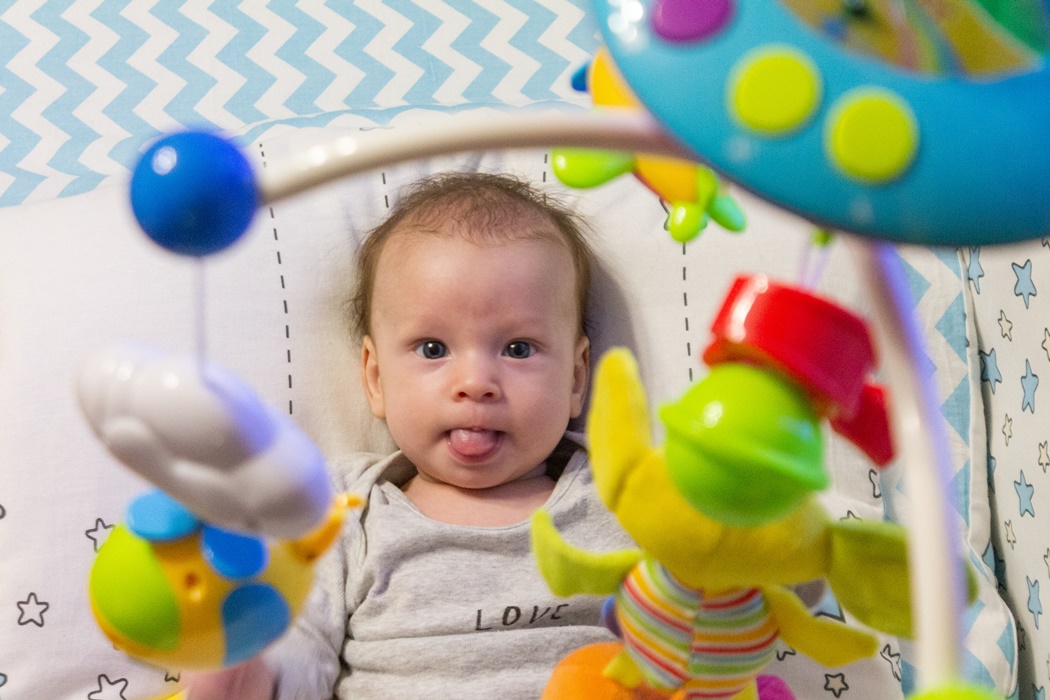
Your baby is born with rather blurry eyesight, but he will soon start following objects with both eyes.
It is a tricky skill and he will need to master the ability to co-ordinate his head movements with his eye movements.
To encourage this, fix a little toy at the end of a stick, hold it in front of him but away from his face, then slowly move it from side to side.
An overhead mobile with lots of different colours, shapes and movement will also attract his attention and encourage him to practise focusing on objects.
As babies see high-contrast images first, black and white designs are great for grabbing their attention.
Mirrors are also fantastic fun for your baby at this age. He is naturally fascinated by faces, and a moving mirror is a great way to entertain him.
Starting 3 months
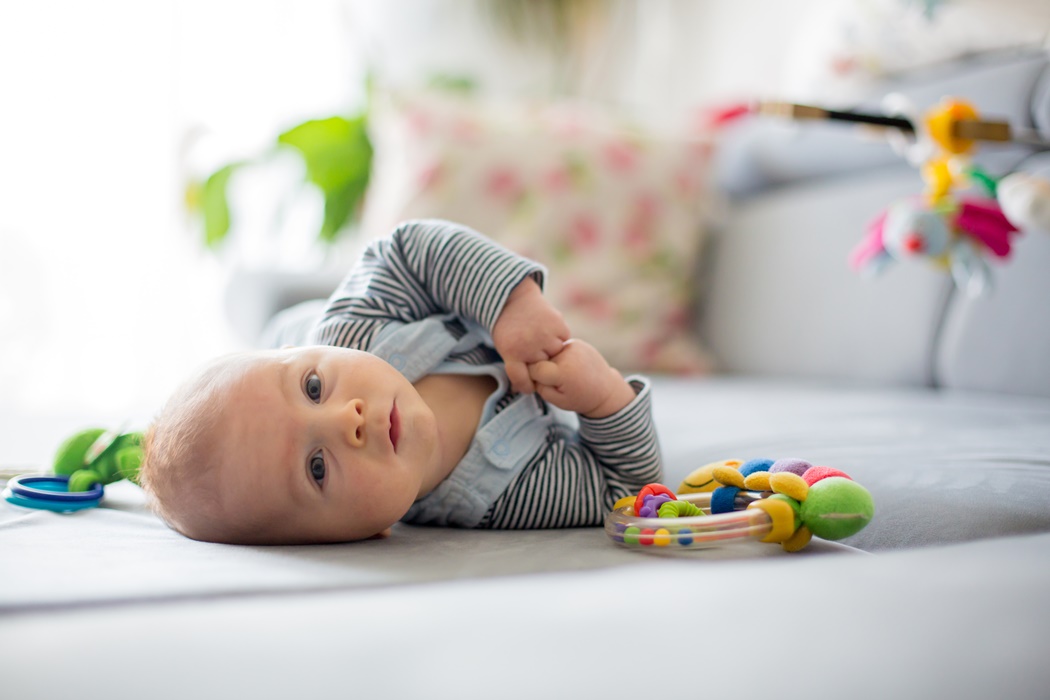
By now, your baby may have started to move his head towards a sound as he learns to pinpoint where noises are coming from – a crucial auditory skill. This also encourages head movement.
Sit your little one in his bouncy chair or rocker and make various sounds from different directions.
For example, shake a box of matches slightly to his left and wait for him to turn his head towards the sound, then shake the box to his right. Play the game again with other sounds.
Rattles are great toys for your baby, because grasping and holding the toys help develop his fine motor skills.
He is also learning about cause and effect: noisy toys teach your baby that it is he who makes the sound start and stop.
This gives him the delightful feeling that he has control over something – an important developmental step.
Starting 6 months

Until now, your baby will have been interested in people, but from the six-month mark, he will also be fascinated by objects.
If an item catches your little one’s attention, he will quickly forget about whatever he has in his hand and will want to grasp the new thing.
He can hold onto a variety of differently shaped objects but is likely to seem a bit clumsy because his motor skills are still quite rudimentary.
At this time, your little one’s mouth is more sensitive than his fingers, so everything will go straight in his mouth to be explored.
Sitting upright gives your baby a new view of the world and also helps him to develop balance, back-muscle strength, and motor skills such as head and neck control.
Support him with cushions so he is sitting up, or seat him in a toy ring and make sure he has lots of objects and toys at hand.
He will love reaching out and grabbing at them, and it is great for developing his hand-eye coordination.
Starting 8 months
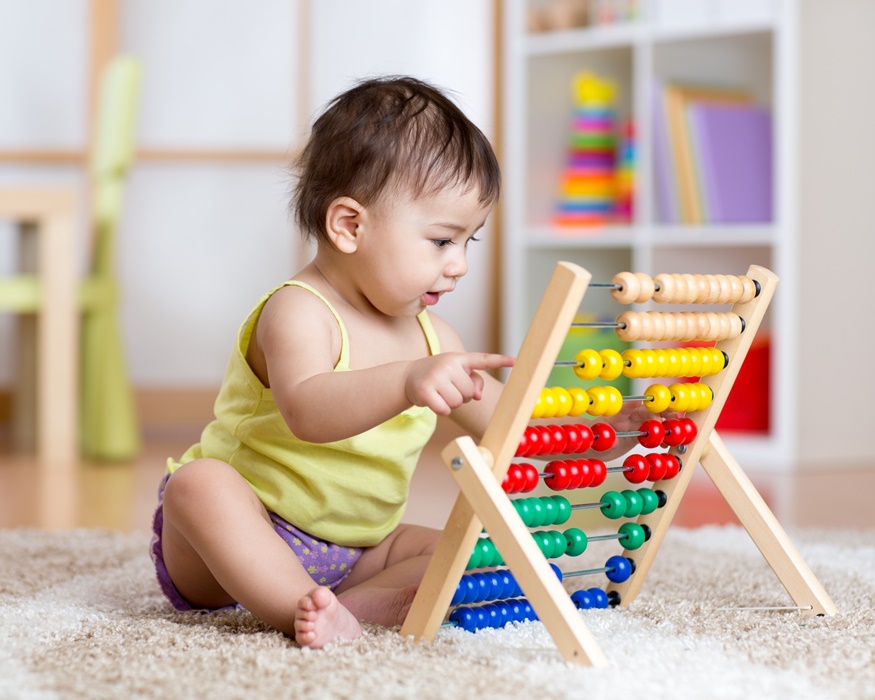
Your little one will stay occupied for ages filling and emptying containers with objects – no drawer of undies or shelf of books will be safe from his inquisitive hands!
Give your baby rolled up socks from your drawer and a box for him to fill and empty.
Emptying is easier than filling so, initially, you may need to help him put things back in – perhaps that is why in later years children love tipping out their toys but are far less keen to tidy them away!
While babies learn to crawl at different ages, if your little one is scooting about confidently, make a tunnel out of a large cardboard box and encourage him to crawl right through by waiting at the other end and saying ‘boo!’ when he emerges.
This helps reinforce his sense of security, as he finds out that things would not disappear just because he could not see them.
Toys that roll are also a good way to encourage your baby to start crawling.
Reaching for a ball that is out of arm’s length also promotes his hand-eye co-ordination and grasping skills.
Your baby may also start to understand that he can pick up a ball and then let it go deliberately.
He will soon start to enjoy watching it fall from his hands, as well as the noise it makes when it hits the ground.
DID YOU KNOW?
Peek-a-boo games are so popular with babies of all ages that psychologists use them as rewards. This type of game also teaches your little one that just because he could not see something it does not mean it is gone. As he starts to anticipate you saying ‘boo!’ with squeals of delight, he is taking early steps in social interaction.
Starting 12 months
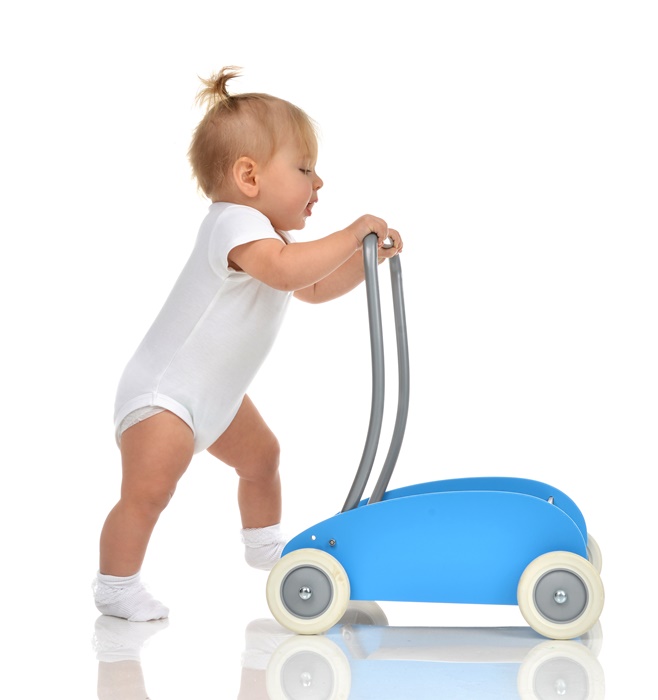
As your baby starts to pull himself upright and take his first unsteady steps, push-toys are the ideal way to support his early walking attempts.
Stumbles and falls are the inevitable partners of learning to walk, but it is important to make sure the push-toy is stable and can support your baby’s weight.
This type of toy also helps your little one to balance when he is standing and provides him with the opportunity to load blocks or other objects into it and then unload them again.
Once he has started walking, toys that need to be pulled can improve his balance and co-ordination.
They also help reinforce the idea that he can control things.
Pull-toys do not need to be expensive – thread different items from around the house, such as cotton reels, dried pasta, or yoghurt containers, onto a length of string for a fantastic home-made version.