





Watching your child struggle with tummy troubles like constipation, colic, or bloating can be heartbreaking — especially when it affects their sleep, energy, and learning.
Many of these issues stem from gastrointestinal intolerance, a common reaction to certain ingredients in regular milk formulas.
That’s why more parents are turning to Similac Total Comfort — a specialty formula that’s gentle on sensitive tummies and helps relieve gastrointestinal intolerance in just 1 day1, so children can grow, play, and thrive in total comfort.
The Formula Parents are Talking About
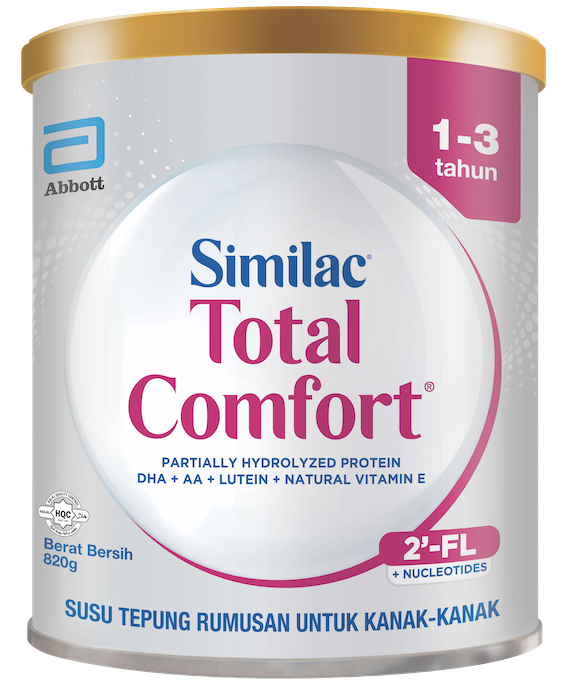 Similac Total Comfort is an award-winning solution trusted by parents who want more than just basic nutrition. Its unique formulation is specifically crafted to support children with sensitive digestion, while also promoting faster learning and stronger immune systems.
Here’s what makes it stand out:
- Easy-to-digest protein – 100% partially hydrolysed whey protein, gentle on sensitive tummies.
- 98% lactose-free – reduces tummy sensitivity and helps relieve discomfort.
- 2’-FL + Nucleotides – supports immune function1,2 which can reduce allergy risk.
- DHA, Lutein & Natural Vitamin E – supports faster brain development and learning3,4,5.
Let Your Child #GrowInTotalComfort
Parents who’ve tried it are seeing the difference: fewer complaints of tummy aches, better moods, smoother bowel movements, and a more active, engaged child. So if your child is struggling with tummy discomfort and you’re looking for a formula that delivers both comfort and complete nutrition, Similac Total Comfort could be the answer.
Want a free sample? Click here to get yours today!