





The past three months has been what most people term as the “new normal”.
Every familiar routine we knew of became something of the past.
In the next few months, as the country moves into a recovery phase (RMCO), there are a lot of uncertainties lurking about what will happen next.
As parents, we ought to keep ourselves and our children psychologically healthy, so that we will not only survive but thrive during unprecedented times.
Here are some tips to keep ourselves and our children emotionally healthy:
As Parents:

1. Cultivate Self -awareness:
Begin by paying attention to our own emotions and psychological health, I often tell parents and young people to visualize a battery and relate it to their emotional health.
Check if the battery level is fully charged. Are we feeling great?
Or is the battery level of our emotional state somewhere in the middle that we feel that we are coping, moving on, but getting tired?
Is our battery level slowly depleting and we are struggling or feeling empty?
Self-awareness is about understanding ourselves and the first step to developing EQ.
When we are aware of our emotions, thoughts, and behaviours, we will then be able to identify our triggers and stressors and find the right coping strategy to help us recharge.
2. Acceptance:
While we all adjusted to the new normal, many of us were also yearning to get our lives back to how it was.
In a short span of three months, adjustments had to be made from work to child care , schooling or learning and the list seem endless.
Parents had to balance it all.
What’s interesting though is that people who were quick to accept that things will not be the same started making plans to adapt, and thrive in the midst of uncertainties.
Acceptance includes coming to terms that the current situation and life for the next few months will not be the same.
Be prepared to expect that routines may be different beyond MCO: our roles, jobs, parenting, children’s schooling needs and
the arrangement would most likely be different in the next half of the year.
Acceptance also encompasses learning to accept our strengths and weaknesses, as well as the strengths and weaknesses of our children and families.
There will be days where we can do it all and the universe cooperates with us, but there will also be other days where we may not have it all together, and that’s ok.
3. Maintain a Support System:
It is important to identify peers or fellow parents who can be part of our support system.
We all need people who can hear us out without judging on difficult days and laugh with us over the many other joys in our parenting journey.
Sometimes we may find it difficult to gather our remaining strength to reach out, however, even reaching out to someone in our support system through a simple text or call once a month can do wonders to our emotional state.
For Our Children:
1. Connection:
Children are wired for connections.
During infancy, we hold our infants close for feeding, nurturing and soothing, it was a natural response.
As they move into toddlerhood and the preschool years, they continue to need this connection from their parents and caregivers, in a different way.
They will still need loads of hugs, cuddles and nurturing, but what’s more important is the presence of their parents: not only physical presence, but mental and emotional presence.
Children need parents to tune into their emotional needs.
For example, a child that is difficult in the morning may be grumpy, and throwing a tantrum, but his emotional need could be craving for a connection first.
Try hugging your child and speaking to them at their eye level for a minute when they are being difficult, tell them that you
are there to love and keep them safe.
2. Maintaining Structure and Routine:
Children rely on routines and structure to give them a sense of security.
At a young age when they may not be able to tell, time, day or date, they rely on cues that we as parents provide them to predict their day.
During times like these, where routines, plans and structures might be off for them and the family, providing some form of structure at home can be helpful to reduce their anxiety and make transitions easier.
Be honest and open to talk to them about the changes in their daily schedule.
Use a visual chart for young children to help them understand and predict their daily routines.
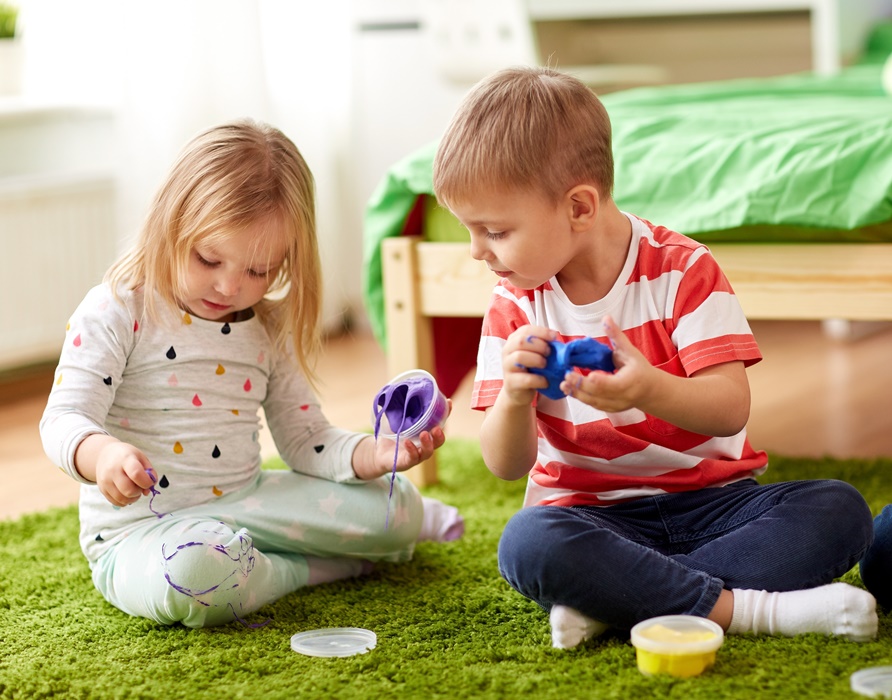
3. Allocate Time for Play:
Play is so important in times of crisis and stress.
Children don’t say, “I had a hard day at school today; can I talk to you about it?” They say, “Will you play with me?” – Lawrence J. Cohen-, Playful Parenting.
Play provides children the opportunity to express themselves and it serves as a sanctuary of safety for a child when things get unpredictable.
It is not only a time for fun but it is children’s language and their opportunity to act out what they experience and gain a sense of control during uncertain times.
Biologically, play can trigger the release of endorphins which is a ‘feel good’ chemical.
Many soft skills such as problem solving, communication and negotiation skills come from play.
The key to keeping ourselves and our families psychologically healthy is to be flexible to adapt, for children it comes through our support and provision of a secure base to be feel, seen and heard.
As parents, remember to keep a check of our emotional well-being and allow room for self-compassion to recharge.
About Author

SIEW JU LI is the Director and Consultant at SEED Connections where she provides mental health support for parents, teachers and children through consultation, play therapy and trainings. Her passion is to see children develop holistically and desire to encourage and empower parents, teachers and the community to promote healthy psychological development for children. Ju Li is also a mommy to 3 school going children, and thus understands the joy and challenges of modern parenting.