





Your baby is finally in your arms after 9 months of waiting! For those who had a difficult pregnancy accompanied by a great deal of discomfort, holding your baby with that euphoric sense of joy is heightened with that feeling of emancipation “I am finally free and can reclaim my body!”
That is until you realise that postpartum recovery is not as easy as it seems. Our healthcare system provides zero guidance to women on how to rehab their bodies after birth – new mothers go in for their postpartum checkup and are usually told that they can resume normal activities. There are no pelvic floor assessments and no instructions other than “do kegels”. I liken this to getting a knee repair receiving no physical therapy and then being told it’s OK to go for a run a few weeks post operation.
The physicality of birth is so often downplayed, that even though mothers are encouraged to rest and recuperate during their confinement period, there is still a lack of evidence based information and guidance to help new mothers navigate through postpartum recovery.
Below I discuss 6 often overlooked issues that will impact your wellbeing post-birth.
Your Womb

Your uterus will expand from the size of an orange to the size of a watermelon at the end of your third trimester. Massaging the lower abs and breastfeeding will aid in the stimulation of the uterus muscles helping it to contract back into its pre pregnancy shape and size.
However, your stretched abdominal walls will most likely remain the same if toning exercise incorporating breathing that connects your deep core muscles is not performed in the early stages of post-birth. Fat will slowly accumulate the void of your abdominal walls, leaving behind a belly that will gradually grow bigger.
Postural Changes
In my second article published in Parenthood’s January issue, I discussed the postural changes to your pregnant body. In a nutshell, these changes affect the natural curvature of your entire spine. A hyper curved lumbar spine will cause lower back pain while bad posture such as rounded shoulder and hunchback will contribute to shoulder and neck pain as well as shallow breathing patterns.
These issues will not correct themselves automatically after birth and will continue to worsen if not intervened with help. Joseph Pilates said “a man is as young as his spine. If your spine is stiff at 30, you are old, if it is flexible at 60, you are young”.
Bad posture ages you, not only in terms of appearance but your spine and biological functions as well.
Diastasis Recti
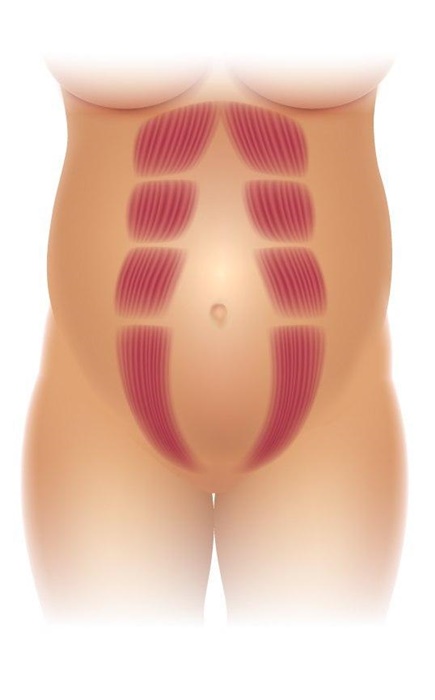
Diastasis recti is a condition where the tissue (linea alba) connecting the rectus abdominis (i.e. your six packs) undergo a thinning and widening process to create space for the growing uterus, thereby forming a gap in between the rectus abdominis. The abdominal wall weakens without the lean connective tissues providing needed support. This causes internal organs to descend into the pelvic cavity, resulting in a noticeable protrusion that gives you the appearance of a mummy tummy.
Given that this condition will severely affect your ability to manage core functions, it is no surprise that this condition is usually accompanied by lower back pain.
For more details on diastasis recti please refer to my article published in Parenthood’s March issue.
Pubic Symphysis Pain
Symphysis pubis dysfunction (SPD), or pelvic girdle pain (PGP), happens when the ligaments that normally keep your pelvic bone aligned during pregnancy become too relaxed and stretchy too soon before birth (as delivery nears, things are supposed to start loosening up).
This, in turn, can make the pelvic joint — a.k.a. the symphysis pubis — unstable, causing pelvic pain. The most common symptoms are difficulty when walking and wrenching pain (as though your pelvis is tearing apart). Typically, the pain is focused on the pubic area, but in some women, it radiates to the upper thighs and perineum.
In certain instances, SPD may worsen after delivery if there were complexities during the labour process such as prolonged labour, forceful labour, or birthing a big baby. This causes the joint connecting the pubic bones to gape apart, which can cause more serious pain in your pelvis, hips, groin, and buttock.
Weakened Pelvic Floor Muscles
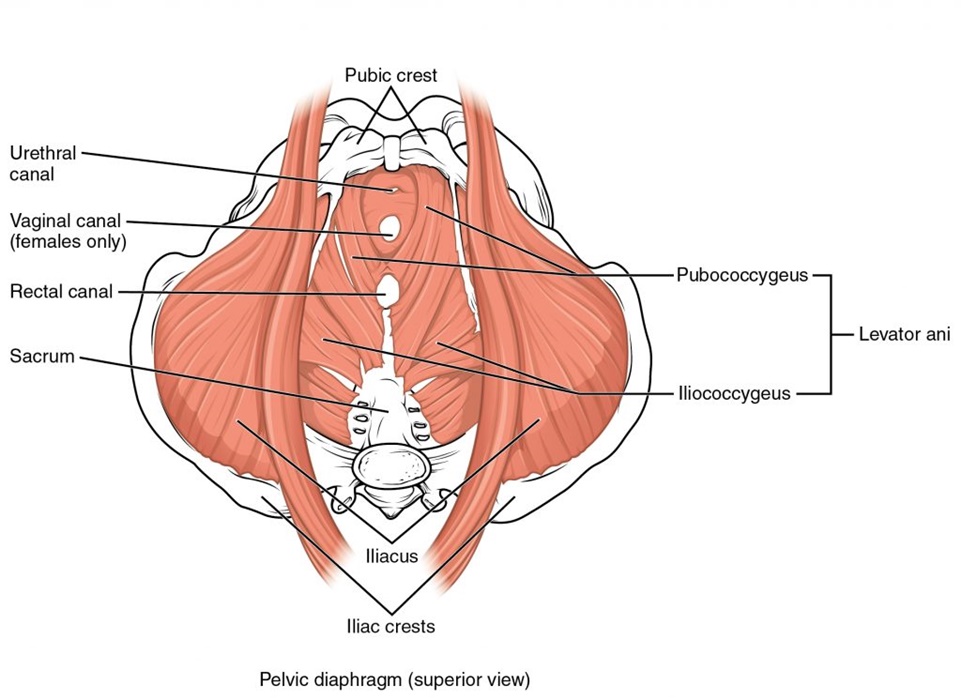
The pelvic floor muscles are a group of muscles inside the pelvis that forms its floor – hence the name. They surround the bladder passage, vagina, and rectum, maintaining control over these opening, preventing leakage of urine and incontinence.
These muscles should also support the urethra, bladder, womb, and rectum and withstand increases in intra abdominal pressure that occur during physical activities. Pregnancy and labour will inevitably stress and weaken the pelvic floor muscles, resulting in organ prolapse, incontinence, and painful sexual intercourse. For more details please refer to my article published in the February issue.
Widening of Hips & Sagging Glutes
Some mums tell me that they will never fit into their pre-pregnancy jeans again as their hips have widened post-baby. This is an aftermath of the hormone relaxin doing its job in loosening your pelvic ligaments to allow your baby to ease his way to the world. Weight gain and incorrect weight bearing in the lower extremities will further compress the pelvis and hip joints, causing the hips to expand wider.
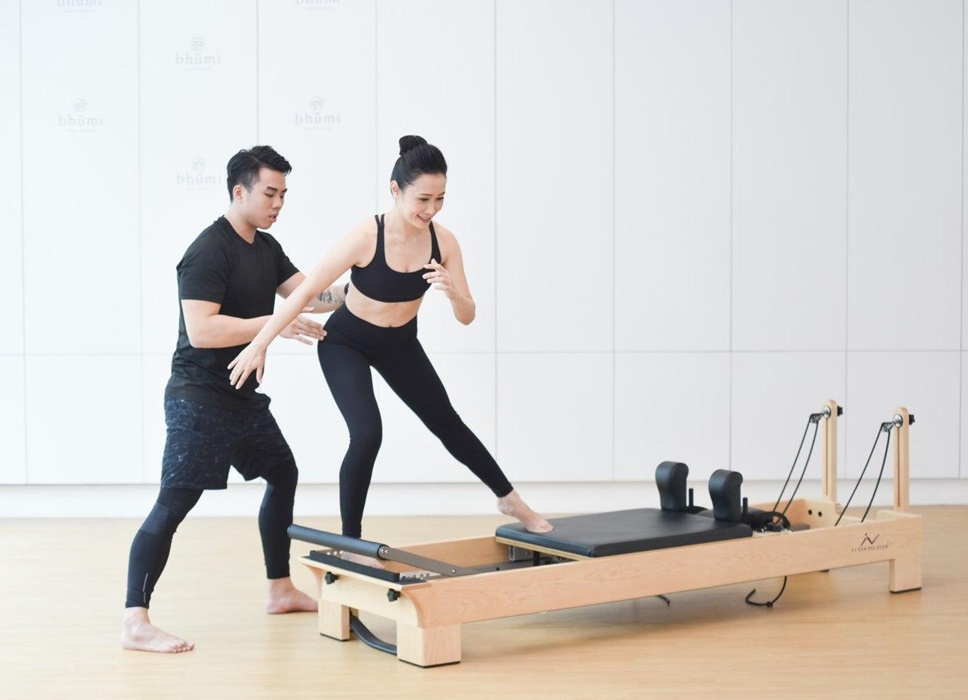
Inactive and weak glute muscles will give the appearance of a saggy buttock. A professional postnatal coach should be able to provide a solution to the above problems after a thorough assessment of your condition and formulating a rehabilitation plan through training and strengthening with a goal to revitalize your body. The best time to do so is before and during pregnancy, the next best time is now.
Lastly, if there was only one thing I could say to all new mothers after birth, it would be to slow down and take time to neurologically reconnect to your deep core muscles. The fact is, the slower you go at the start, and the more re-establish your deep core connection, the stronger you will be for years to come.