




Just as we are starting to enter the endemic phase for Covid-19, the number of Hand Foot Mouth Disease (HFMD) has been on the rise with increasing number of cases reported on the daily. On average, active cases of HFMD has reached 1000 – 2000 per day.
Compared to year 2021 with a total of 2,485 number of cases, Malaysia has recorded a whopping 82,846 number of cases to date so far (as of 4th June 2022)1. That is 32 times more compared to 2021, which is pretty scary!
In order to protect our family and loved ones in indoor environments, it is important to understand what is HFMD exactly and how it is being spread.
What is HFMD?
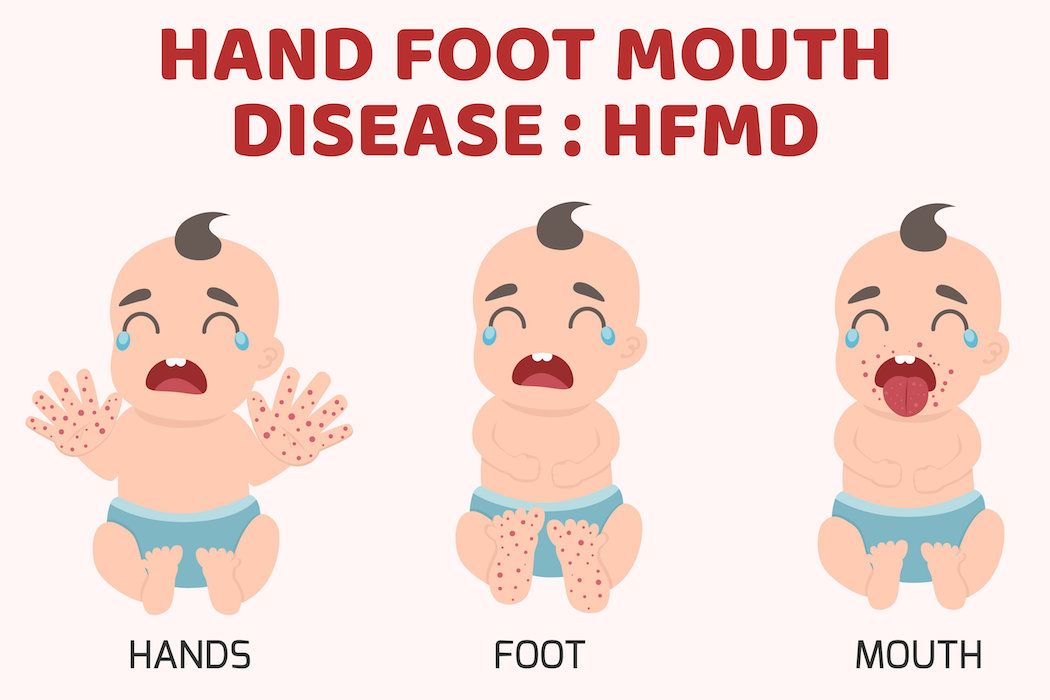
HFMD is a virus infection among children that causes sores or ulcers inside or around their mouth area and rashes or blisters on their hands, feet, legs, or buttocks. HFMD is caused by viruses from the Enterovirus genus most commonly known as the Coxsackievirus A16.
HFMD is passed through contact from an infected person’s body fluids, including saliva from their coughs or sneezes, nasal secretions, feces or fluid from open sores. It may also be transmitted by touching objects or surfaces that has traces of have the virus on them, like tables, stationaries, doorknobs, toys or walls.
The HFMD virus is most commonly transmitted in public settings such as kindergartens, schools, public playgrounds and childcare centres, where children gather and spend a chunk of their time to learn and play. Hence, young children under the age of 5 years old have the highest risk of getting HFMD. However, it is possible for older children and adults to also get infected with this disease, especially if they have a weak immune system.
Signs & Symptoms of HFMD
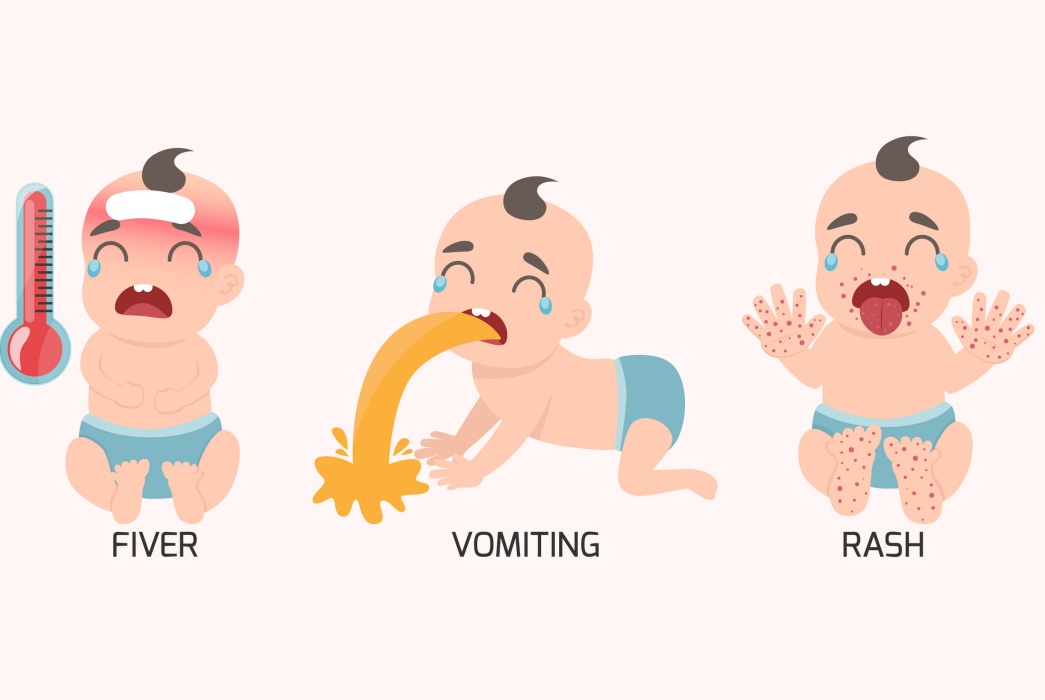
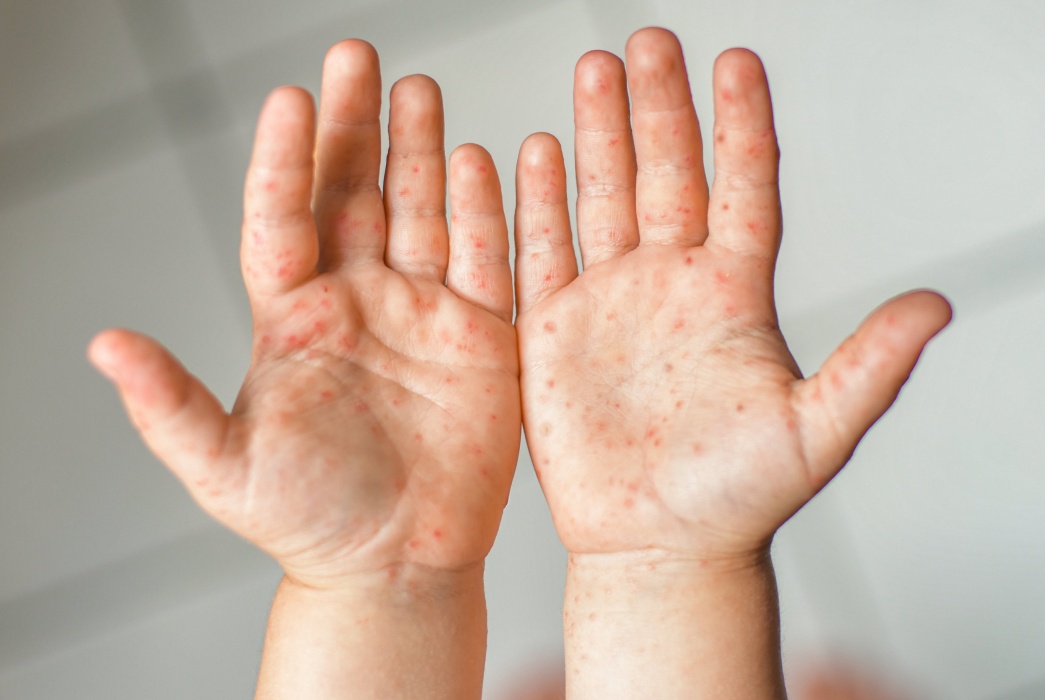
HFMD begins with fever and sore throat. After a day or two, painful ulcers will develop in the mouth. Some children have red spots developing on their palms or soles of their feet, which may turn into blisters. This skin rash can also occur on their knees, elbows or buttock areas and may leave scar marks.
Symptoms of HFMD
- Fever
- Sore throat
- Ulcers in the throat, mouth and tongue.
- Headache
- Rashes with vesicles (small blisters 3–7 mm) on hands, feet and diaper area. The rash may also be present on the buttocks, arms and legs.
- Poor appetite
- Lethargy
- Vomiting
While some children develop the typical signs and symptoms, others may just have a skin rash or mouth ulcers, or experience no signs and symptoms at all. Occasionally, a doctor tests for the virus by sending throat swab samples, or samples taken from stools, to a lab.
How can we protect ourselves and our family from HFMD?
HFMD is highly contagious, and easily spreads. In most cases, the infection will go away without treatment within 7-10 days. However, health professionals usually prescribe medicines to ease and relief the symptoms. Nevertheless, prevention is always better than cure! Here are some steps you can take to protect you and your family from HFMD.
BE ALERT
It’s essential to observe your child’s surrounding area to ensure they are clean and be aware of their friend who has contracted HFMD. Keep yourself updated with the HFMD status at your child’s school by keeping an open-line of communication among the daycare staff, teachers and other parents.
PRACTISE GOOD HYGIENE HABITS
Coughing and sneezing are common ways to spread the HFMD virus. Be sure to teach your child on personal hygiene, such as washing their hands after using the restroom, before meals, or after coughing and sneezing especially when in public areas. Remind them to continue wearing a mask and practise social distancing at all times. It is also important to clean and sanitise their toys and other items after use.
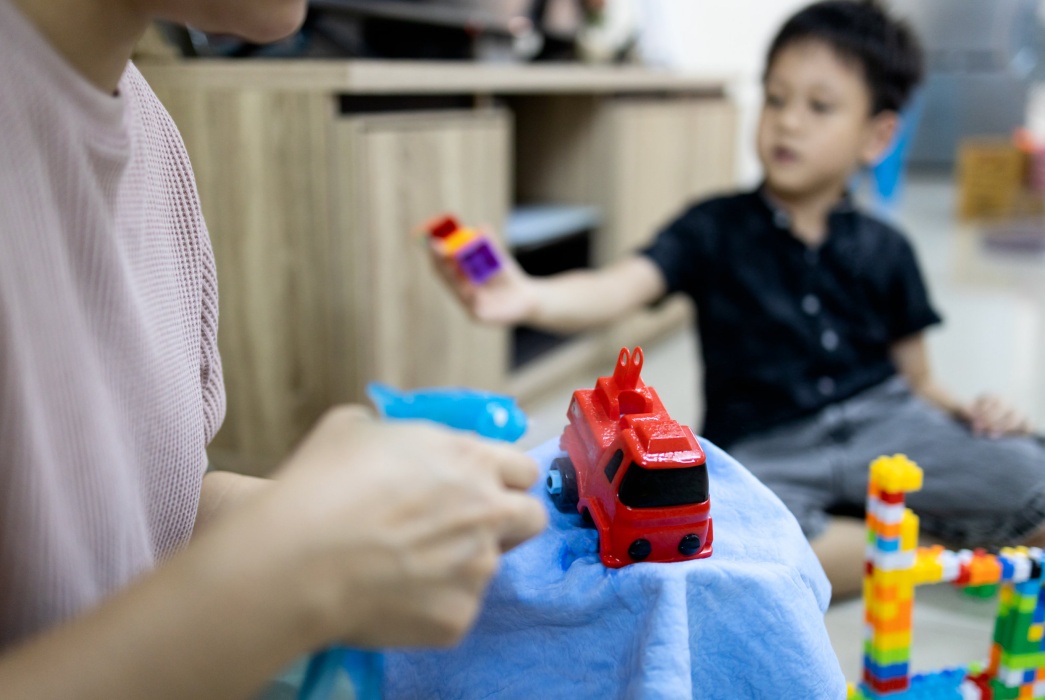
KEEPING YOUR SPACE CLEAN & DISINFECTED
Keep your surrounding clean by cleaning and disinfecting frequently touched areas. Disinfect toys, car interiors, furniture and especially any items your child comes in contact with daily – their bedroom furniture, bedtime books, stationaries and more.
PAINT YOUR WALLS WITH NIPPON PAINT VIRUSGUARD
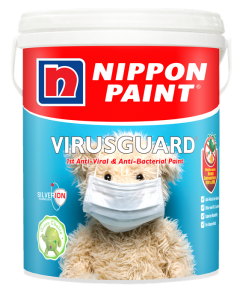
Most children touch the walls when they play, crawl or walk. But when it comes to cleaning, most adults tend to neglect the walls, letting it host bacteria and infectious diseases. One of the ways to prevent the spread is to use an anti-viral and anti-bacterial paint to coat your walls.
Nippon Paint VirusGuard is lab tested and effectively proven to resist the growth of up to 99.9% of harmful viruses and bacteria including:
- Hand Foot and Mouth Disease (HFMD)
- Influenza – eg., H1N1(Swine Flu)
- Bacteria- such as E. coli, MRSA and Staphylococcus Aureus
- Covid-19 (SARS-COV-2)
The anti-viral and anti-bacterial paint uses Silver Ion Technology to prevent the spread of viruses and bacteria through a three-step approach:
- Deactivation of the function of viruses and bacteria
- Reducing its ability to multiply and reproduce and;
- Inhibiting its growth which ultimately causes the death of the bacteria and viruses
Nippon Paint VirusGuard is also an environmentally- friendly coating solution that also comes with the Singapore Green Label Test certification. This makes it the perfect anti-viral and anti-bacterial coating for your home and a smart invention that can help fight the spread of harmful viruses and bacteria indoors.
For more information on Nippon Paint Anti-viral and Anti-bacterial range, please visit www.nipponpaint.com.my/virusguard/keepingeveryonesafe or reach their customer service at 1800-88-2663.