





The key to being financially secure is not how much money we make, but how well it is managed.
Are you the type to save and go without your own wants to ensure your children get the small luxuries in life? While the joy you see in your children’s faces should be enough, sometimes, it may feel exasperating that you must sacrifice your own wants and needs to provide them that happiness.
While the saying goes “money cannot buy happiness”, sometimes, having a little extra savings can eliminate stress especially during unplanned situations. Having a good job and steady income would still be insufficient if we do not know how to handle our money. In these trying times, where do you stand with your personal finances? The key to being financially secure is not how much money we make, but how well it is managed.
Growing a family means better financial planning is needed. The pressures of raising children are already overwhelming as it is, without having to worry if you have enough money especially in the case of sudden incidents or unexpected expenses. Having children would mean that there is a need to reconsider your spending habits.
If you feel overwhelmed and unsure how to rework your finances, do not worry as we are here to help you plan your finances.

The 60-20-20 Rule
The 60-20-20 rule is a simple approach to how you should allocate your monthly income. It’s a budgeting template that lets you organise your finances in a simple way. The best part is that it actually leaves you some money to spend on yourself.
So start by planning your finances every month. List down all your monthly expenses and categorise them into categories, for example:
- Living expenses– These can be fixed costs such as payment for your house, car and internet or fluctuating cost like electric or phone bills. This may also include other expenses such as diapers, milk, groceries, tuition fees, health insurance, petrol, toll etc.
- Savings– This includes things like your emergency fund, retirement fund etc.
- Personal wants– These are things that you want to buy but could live without. Depending on your lifestyle and preferences, this might be shopping, ordering a special meal for the family or travel.
Once you’re done listing it all down, look at how much you’re spending through the lens of the 60-20-20 budget. You can also use financial apps or eWallets to help you track your spending and be more aware on where your money goes every month.
eWallet
For many of us, the eWallet is an essential daily app especially in these changing times. Usage of eWallet is not only fast, but safe and hassle-free. It is especially encouraged during the pandemic, as it eliminates the need to hunt for ATMs and enables you to go entirely cashless and contactless when out and about.
In addition to the daily use of the eWallet, perhaps it is time to consider if your eWallet can help you with savings. What is the first thing you do when you receive your pay? Do you keep track of where your money goes every month?
The Touch ‘n Go eWallet
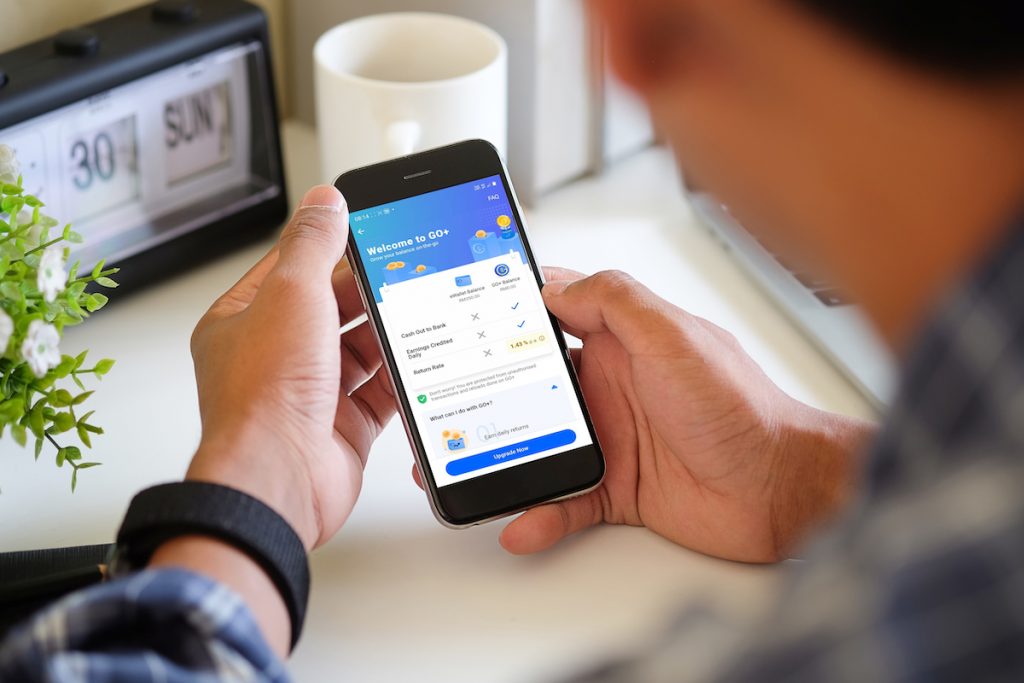
The Touch ‘n Go eWallet stands out from the rest as it is the only eWallet that will actually help you to earn through the GO+ feature. How?
While making payments, you can track your spending every day. Once you know how much you need to spend monthly, cash-in the amount into GO+ on your pay day to avoid the hassle of multiple cash-ins and making sure that you are not overspending. The GO+ feature is a money market product that allows you to earn daily returns on your unused balances. It is the perfect option as it allows you to make payment and earn returns better than savings account.
By planning early and making the most of our own finances, we can plan to accumulate savings for children. According to the 60-20-20 rule, 20% should be put aside for savings. This includes saving for our kids education and tuition fees in the future. By starting a savings plan early on (even before your child begins primary school), you can reduce the burden of taking on high debts to pay for his or her higher education.
To ensure your income can go beyond your pay-check in the longer term, part of this 20% should also go into long-term investments such as a retirement fund and should also include short-term goals like that much-needed family holiday, minor home upgrades and repair etc.
Now that you have learnt a little more about the 60-20-20 rule, go ahead, and start planning! if we don’t review and plan our finances accordingly, chances that we’re over-spending on unnecessary things could be high and this could bite us back in the long run.
Click HERE to find out more about GO+.