






Concepts like love and care are foremost in our minds when we envision an ideal relationship between a parent and a child.
While these elements play key roles in maintaining healthy relationships with children, we often undermine the power of communication and how this would help us better understand and connect with them, even amidst tantrums.
What we sometimes see as failure to behave properly, is actually a failure to communicate properly
– Author Unknown
Positive communication is key in raising confident children – no matter how young your child may be. Positive communication would more likely instil behavioural changes and encourage your child to speak with clarity, confidence, build self-esteem and also learn to be a good listener.
How then can we inculcate positive communication with our children? What are some of the techniques that we parents can apply in our daily interaction with our children? Read on below.

The Art of Self- Regulating
When a child is struggling to complete his homework, he may begin to display his frustrations and annoyance through his actions and verbalisations. This may frustrate parents, and while they may respond with good intentions to help their child in their struggles by offering advices, they may instead come across as lecturing to the child.
Karen shares, “When a child does not feel heard and understood in their emotional struggle, needs are not being met, hence there is no connection with the child. When that happens, they tend to be less responsive and less cooperative. The ability to regulate our emotions in order to remain calm (when our child is unable to) would better enable us to address our child’s needs and provide him with a safe space to express himself emotionally.”
Consistency is Key
Karen believes that, “positive communication means communicating in a way that allows for connection between parent and child, where both parent and child understand each other’s needs and are meeting them.” It is a journey, and is not inculcated in a day but through a course of best practices in and out of home.
As such, co-operating with your child’s teacher can help ensure that the communication approach is carried out consistently at home and in school. Consistency in encouraging good practices through positive communication will more likely help to encourage these practices.
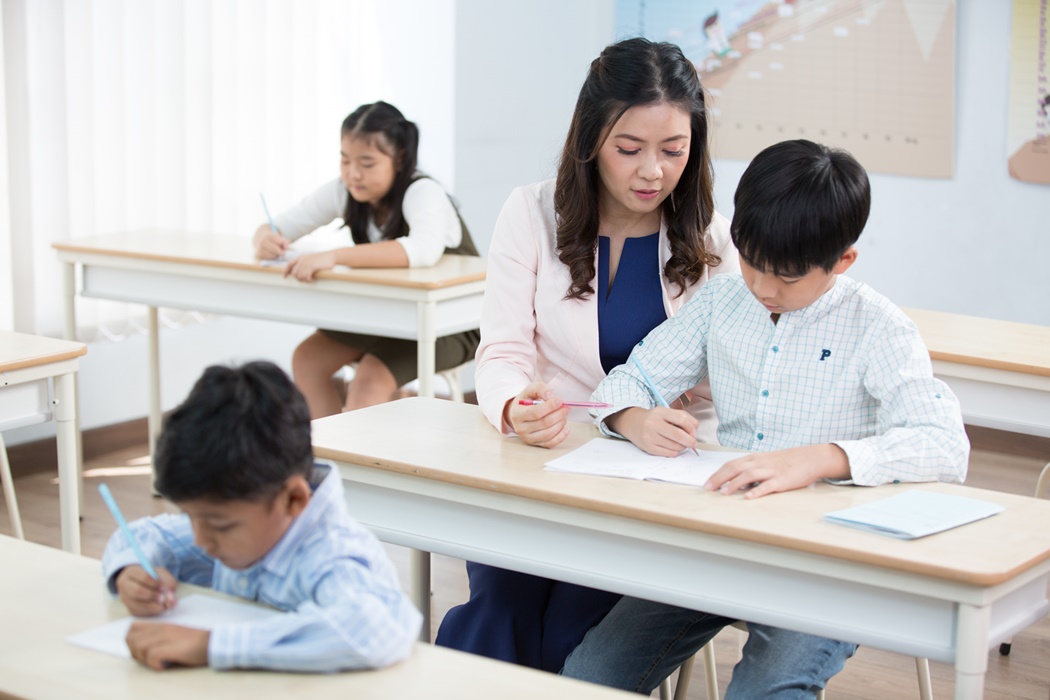
In their learning journey, Kumon Malaysia encourages students to complete their worksheets with minimal guidance from the Instructor. Instructors practice positive affirmations, encouraging students to realise their mistakes on their own and be their own teacher and cheerleader, encouraging them to press forward. This empowers students to be independent and develop self-learning.

Acknowledge Reservations
If your child has an introverted personality, there may be occasions where you found it difficult to encourage your child to speak up to share his thoughts and ideas. Individuals with introverted personalities tend to think through their thoughts before sharing, and would often prefer to keep thoughts to themselves rather than sharing them.
Karen suggests that it may be helpful to, “firstly, acknowledge that they would prefer to keep their thoughts and ideas to themselves. Then, explain to them the benefits of sharing their thoughts and ideas so that they may consider (self-motivate), choosing (active decision on
their part) to share their thoughts.
Individuals with introverted personalities tend to think through their thoughts before sharing.
Acknowledging emotions and thoughts are important as it communicates to children – “I hear you and I understand.” When they feel heard and understood, you can then begin to problem-solve together with them in order to express themselves more, as part of their learning process.”
Listen
Children learn to speak within the first 2 years of life, beginning with basic sounds and syllables, as they are learning the rules of language and speaking. During this tender age, children are beginning to communicate. However, in today’s digital age, it is not unusual for both parent and child to experience interrupted communication, especially when a text or a call is simply a tap away.
As a result, children may begin to adapt to these frequent disruptions and develop shorter attention span as they adopt similar behaviours. As such, setting aside uninterrupted, special time with your child would allow you to focus on your child and spend uninterrupted time together.
You could ask your child to tell you about his or her day, what he or she liked or disliked, and listen attentively to what they are saying and how they are expressing themselves. This facilitates more conversations with your child, as they have your undivided attention to fully connect and communicate with you.
Positive Affirmations, Specific Observations and Words of Encouragement
One of the myths of commonly practised positive communication is the use of praises, with the likely intention to encourage and boost a child’s self-esteem. However, praises such as “Fantastic job!”, “Awesome!”, “Amazing!” tend to be evaluative statements. Karen adds, “While the intention to praise is good, it would serve the child better if we use positive affirmations, specific observations and words of encouragement so that the child knows specifically what he is being praised for.
For example, “This practice sheet was hard for you but you persevered and managed to complete it.” Positive words of affirmation, specific observations and words of encouragement teach children to recognise their own potential and not seek external validation through evaluative statements.”
At Kumon, Instructors offer descriptive words of affirmation and comments that hone in on 2 areas – acknowledgement for accurate answers, methods or approaches as well as encouraging students to realise their own mistakes. This descriptive feedback approach helps build confident students as they will eventually understand what works, and whether they are approaching problems in the right way.
Try Again
Children may give up easily, especially when they tend to compare their performance with their peers. Pay close attention to your child as they may sometimes feel inferior towards a particular subject, sport or activity as they do not want to be poorly compared to their friends. Encourage your child with positive reassurance that it is normal to fail as long as you learn from your mistakes and try harder the next time.
While it is a good practice to encourage your child to seek help when he or she is faced with difficulty, it is also important for us to help our child develop resilience and determination as this prepares them for unforeseen challenges as they grow older and eventually into the working world.
Encourage your child with positive reassurance that it is normal to fail.
Learn from mistakes and try harder the next time.
That is why, in a typical Kumon classroom, students are encouraged to attempt to solve problems on their own before seeking for help from the Instructor. This builds on their tenacity to master something that they may not be familiar with at first.

Despite failures, they will pick themselves up and try again. Be patient and be your child’s pillar of strength. You will raise a determined child who is keen to explore and attain greater heights. All in all, positive communication is not an impossible thing to do.
Baby steps go a long way as we continue to grow with our children and understand the different ways, they try to communicate with us. It is important to first understand and respond to their needs when we communicate, in order to better connect with them. Start by creating a conducive environment that is positive, uplifting and safe for a child to express him or herself.
As famous author, Tony Robbins once said:
To effectively communicate, we must realise that we are all different in the way we perceive the world and use this understanding as a guide to our communication with others.