



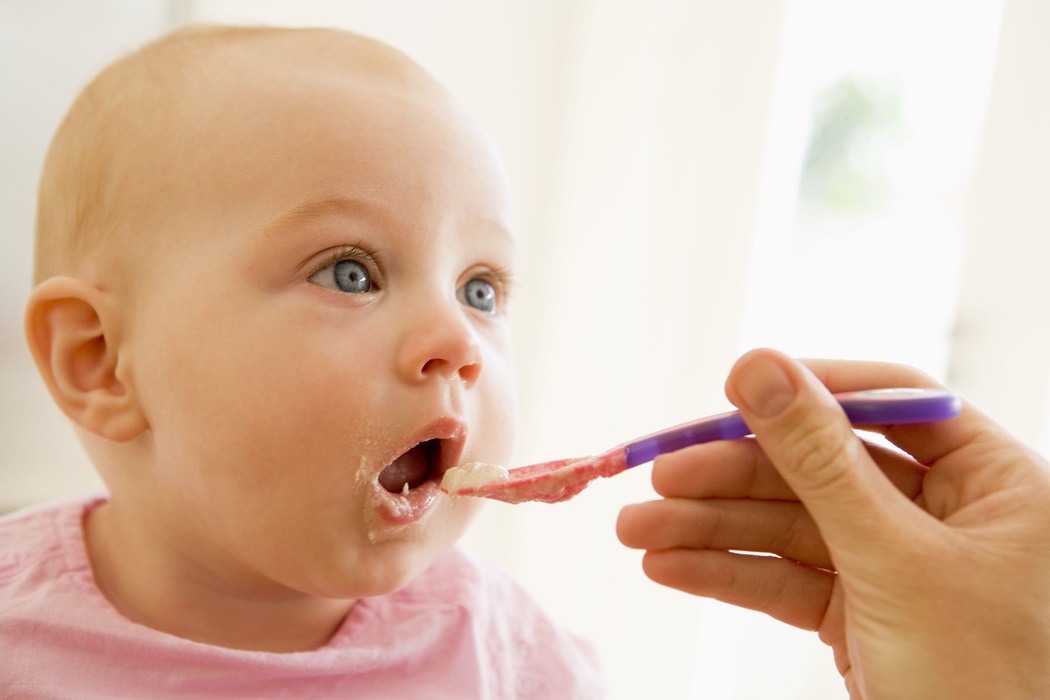


The American Academy of Paediatrics (AAP) says it is best to wait until four to six months to begin offering solids since your baby’s first meals serve more as a training ground than actual nutrition boosts. If you wait much past six or seven months,
babies tend to become apprehensive about new experiences. You will want to take advantage of the easy smile and fun mind-set of a four to five month old baby.
By four months of age, your baby’s tongue-thrust reflex, which protects him from choking on foreign objects, should be almost gone, and he should be able to support his own head so he can sit up and swallow food properly. There also has to be an interest on his part. If he is licking his lips when you are chomping on pizza, chances are he is ready for some variety in his own diet.
If you have a family history of allergies, consider waiting longer to introduce that first meal. Speak with your paediatrician and ask how long you will need to wait to give your baby’s digestive system an opportunity to mature enough to resist food allergies. And if your baby arrived prematurely, make sure you have given her enough time to master the suck-swallow-breathe pattern necessary to handle solid foods.
What to serve

Single grain cereals made especially for babies are far more nutritious than vegetables at this age. Start with one cereal (most doctors suggest starting with rice cereal) and wait at least a week before trying something different to ensure your baby does not have a reaction to the food. Then move on to other grains like barley or oatmeal. Next, try bland veggies like peas and green beans (again, one at a time to reduce the chance of a food allergy), and then have fun with the tastier veggies like squash, sweet potatoes and carrots.
Once your baby has accepted all those, it is time to introduce fruits. Let your baby get used to the blander flavours because it can be hard to go back to vegetables once she has hooked on bananas.
How to do it
Since you are not trading the breast or bottle for three square solid meals a day, keep these first feedings fun and low stress. Do not worry if things do not go as you had planned – your baby will let you know how much or how little she is prepared to eat.
If you begin at four months and your baby is still tongue thrusting, stop and try again a few weeks later. Babies get all the nutrition they need from nursing or bottle-feeding until nine months of age, so until then it is all about the taste, the experience and the practice.

If your baby has not sat in the highchair before, now is a good time to start. Prop her up with blankets, but if she is scared, move her to your lap. Here are some more tips:
- Begin with a short nursing or bottle-feeding sessions to take the edge off her hunger.
- Give her a wide-mouth baby spoon or a rattle so she has something to focus on while you sneak that first bite into her mouth.
- Scoop a small amount of cereal on the tip of the spoon and place it on her lips. Do not be surprised if she pulls back in shock or does her best to get it off her lips. And expect that most of what is offered will wind up on the bib, you or her head.
- It might be tempting, but do not put the remaining cereal into her bottle for a bedtime snack. Learning to associate the spoon and highchair with solid food is an important step.
- If things went well, try again tomorrow. If your baby refused (or worse, erupted into tears), do not revisit solid food within the next couple of weeks.

Healthy eating habits should be developed from young. Here are some practical tips that will help you establish good eating
habits in your child.
- Avoid fast food for as long as possible.
- Try to provide a balance of protein, carbohydrates, fruits and vegetables. Use sweets, salts and fats in moderation.
- Do not over-feed your baby. Watch out for cues that he is full.
- Do not try to make your child eat food he does not like. Respect his preferences and avoid power struggles over food.
- Do not bribe or reward your child with food. Instead, offer plenty of hugs, kisses and attention.
- Make sure your baby is sitting upright before you start feeding him. Feed your baby in his highchair whenever possible, rather than in front of the television or on the go.