




Parents can see countless marvellous things from the blending of video-viewing and drawing. Just like the saying goes killing two birds with one stone!
Empirical studies show that children aged six and below are able to remember what they watch, to show their understanding, to evaluate topic, and to analyse subjects when video-viewing is followed by drawing activity.
Fabulous facts about video-viewing and drawing that parents must know!
Able to understand
After video-viewing, parents may check the child’s understanding on the video content. Parents need to encourage the child to describe objects and elaborate ideas that are visually presented in the video. If the child is able to do any of these, it indicates that the child demonstrates a great understanding of the video content. Besides, these young children will be able to re-describe the video content they watch in a visual form (drawing), which also promotes visual literacy amongst young children.
Able to remember
After watching a video, young children generally are able to re-tell the story of the video or recall some of the characters or objects in the video. The child may also draw a picture and then verbally name the picture they draw. The drawing activity that comes in after the video-viewing facilitates young children to recall information and to show greater understanding from the video.

Able to elaborate
Never underestimate young children’s ability in elaborating ideas. Video-viewing facilitates children in giving good reasoning, making personal judgements and presenting a sound statement.
“Never underestimate young children’s ability in elaborating ideas.”
Able to evaluate and justify
Video-viewing also supports children to evaluate things. Young children are capable to justify what their favourite video is and why they favour it most. Give them opportunities to always justify their claim by expressing their anticipation to distinguish. Allow extended discussion too.
Able to analyse
Parents must understand that young children are able to analyse video content. Don’t be surprised if they are better than us! Remember that children are more honest than adults. Young children know to reason out why they favour the video by drawing connections between what they watch and what they experience outside the classroom.
So, what should parents do?
Here are some wonderful activities which parents should do to support their child’s language and literacy with video-viewing.
Parent-child dialogic talk
Encourage your child to participate in discussion or parent-child dialogic talk. This is essential because during this session, parents can support their child to reach higher levels of understanding or competency which they would not be able to attain on their own.
Sit next to your child and talk about the video while watching it. You may ask your child’s feelings, favourite hero or heroine, or preferred ending. You can throw simple Yes-No questions or more difficult questions to allow your child to recall what s/he remembers and understands from the videos.
Children are naturally happy to tell and talk about they know. Always ask and respond with a positive voice tone and give positive behaviour comments during this parent-child dialogic talk. Grab this golden opportunity to actively engage with their conversation. Never let your child watch videos alone. And, don’t be too overwhelmed. Never force your child to finish watching the video if s/he does not want to. Forcing children to do things can backfire.
“Never let your child watch videos alone.”
Drawing
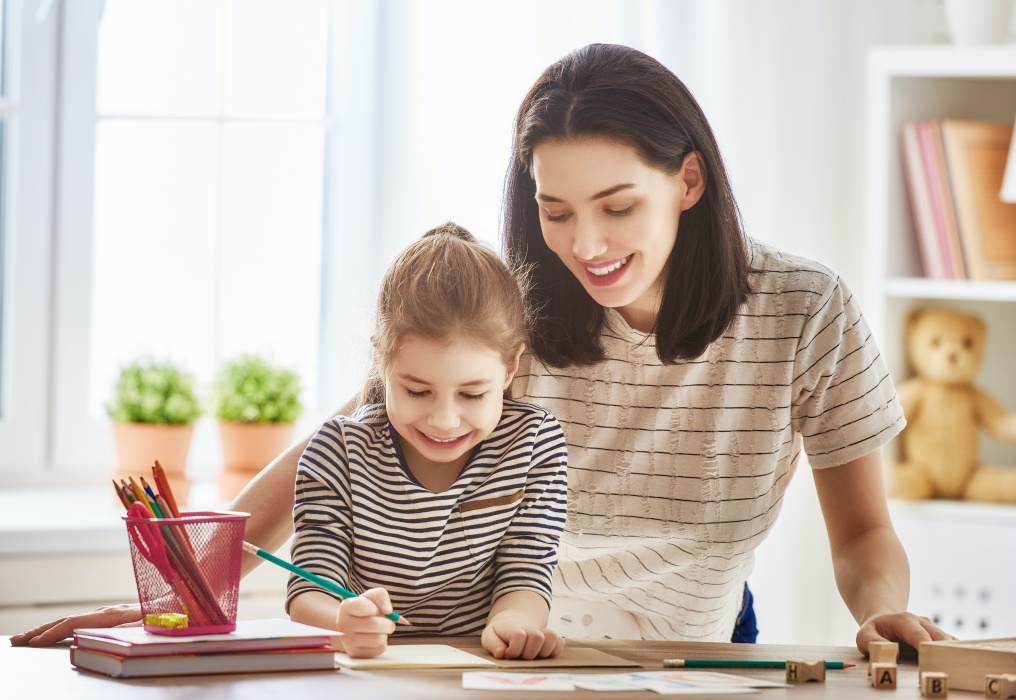
After watching, encourage your child to draw. Sometimes encouragement is not really needed when it comes to drawing activities. Undoubtedly, children are always keen to draw things they see. You can prepare A4 papers, drawing blocks or art easels with paints for the child to have fun with colours or paints and brushes. Let your child draw any object that s/he can remember from the video.
Perhaps, a longer time is needed to get your child talking more about his/her picture with you. Children often talk to each other when they are doing things particularly when drawing. Through drawing, parents may observe the child’s ability in recalling information from video and see the child’s ability in expressing his/her ideas and thoughts visually.
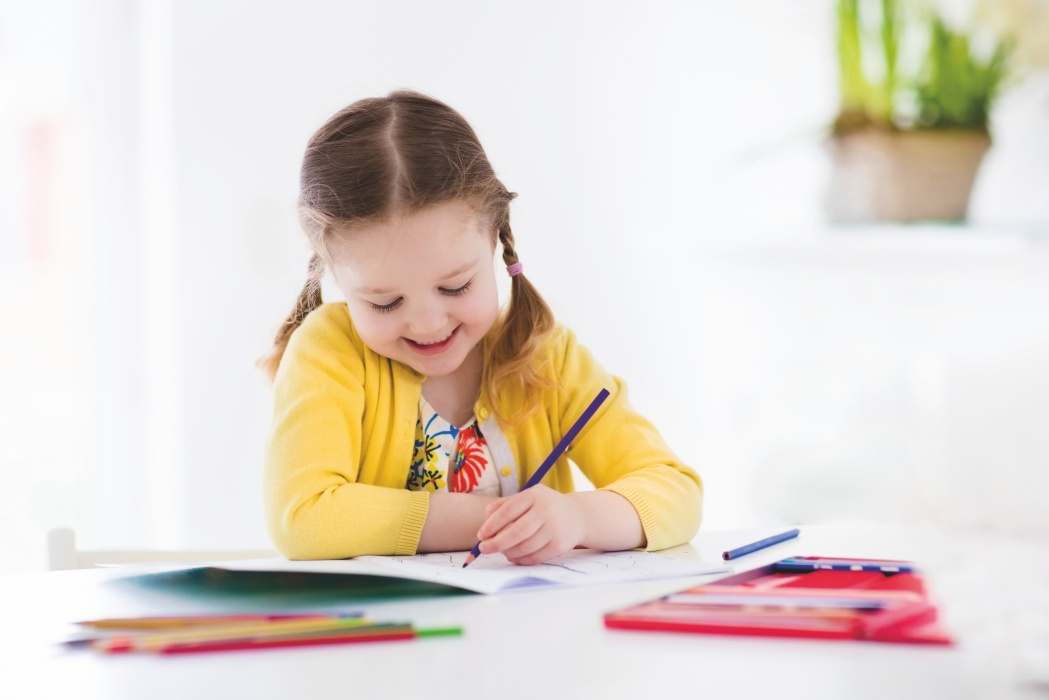
Be happy and pleased to see if younger children draw a simple wobbly circle shape or any form of uncontrolled marks (scribbles). In the early literacy stage, drawing is an opportunity for self-expression and expressing ideas. Scribbling represents both writing and drawing for young children.
“Be happy and pleased to see if younger children draw a simple wobbly circle shape or any form of uncontrolled marks (scribbles).”
Writing
For advanced children (i.e. more advanced in cognitive development at a young age), they are capable of writing words and a sentence. You need to support the child to use his/her knowledge of sounds for her/him to have a good sentence writing.
The ones who are less able in writing need support and encouragement from their parents/adults/older siblings. Sounding out words or saying words slowly is very helpful for children to produce writing. Given sufficient time, more children will have written something to describe their drawing.
If children are required to do two activities, one after another (i.e. drawing first and then writing), children are likely to draw first and write at the end. Encouragement for them to write a sentence must also be emphasised at all times. Therefore, encourage your child to write a little ‘story’ on his/her drawing. This can facilitate your child’s early literacy skills.
Learning if mediated by a skilful facilitator (e.g. parent/adult) and specific materials and activities (i.e. video-viewing with parent-child dialogue and drawing) can be meaningful. Vygotsky believed that a skilful facilitator could structure children’s thinking through scaffolding. Other than that, the use of video-viewing has potential to support symbolic understanding and to allow young children to make connections with their real-life experience inside and outside the classroom. While children share their experience with their parents in the parent-child dialogue session, parents have the opportunity to engage the child in cognitively challenging conversations or dialogues and therefore enhance thier child’s early literacy skills.
Videos can be a tool that could be used in a multitude of ways to facilitate young children’s literacy skills and not as a ‘tool’ for them to watch for long hours to keep them quiet!
Children should not “sit and stare and stare and sit, until they’re hypnotised by it” as what Roald Dahl wrote in his poem entitled Television. If a drawing activity is added, the children can engage and communicate with their parents before, while and after drawing even longer using the new vocabulary they learn through video-viewing and parent-child dialogic talk.
If parents take their child a step further by encouraging the child to write, some children can write a sentence or a phrase or a word below their drawing. This allows comprehension, language development, and literacy to increase. Therefore, video-viewing and drawing with parent-child dialogic talk has a great potential to support young children’s literacy skills.
About the Author
 Dr. Rahimah Saimin is a Senior Lecturer at Faculty of Major Language Studies (FPBU), Universiti Sains Islam Malaysia (USIM). She completed her PhD in Education from the University of Dundee, Scotland and presented her research and works in SERA (Scottish Educational Research Association) and BERA (British Educational Research Association). During her stay in Scotland, Dr Rahimah worked closely with nursery and primary school children as a researcher, as a parent, and as a volunteer. She also actively participated in playgroups and bilingual group activities at nursery schools and community centers while she was there. Upon her return to Malaysia, she aims to continue exploring her real passion further. That gives her the burning desire to share what excites her and what matters to parents and teachers out there. She’s also a mother and has three kids aged 14, 11 and 6 years old.