





Atopic dermatitis (AD) or widely known as eczema is common among infants and young children but for some, it can continue into adolescence. For 19-year-old Ashvini, her condition peaked at 15 years, making it difficult to even leave the home at times. Through it all, mum Gouri has been a stalwart companion, demonstrating the importance of family support in managing AD.
Atopic dermatitis (AD) or eczema is common among infants and young children and for some, it subsides while others go on to experience symptoms in adolescence as well. As a result, the tempestuous adolescent years that include hormonal and physical changes, awkward social interactions, the lost school days, stress of doing well at school, and dealing with personal relationships are further complicated by the need to manage their itchy and scaly skin condition.
Several new studies indicate that disease burden may be higher in adolescents than in adults with atopic dermatitis, and that adolescents with the moderate-to-severe disease may face an even greater unmet therapeutic need. [i]
Essentially, AD can impact the entire family, and it is important to acknowledge the many struggles that parents face in raising kids, in addition to the appropriate care that is required when their children experience severe AD. Misconceptions about the condition add to the challenges too!
Thinking that AD is infectious.
AD is a chronic inflammatory skin condition and therefore cannot be passed to others1.
Believing that children will automatically outgrow AD.
While most cases of AD begin in infancy or childhood, many continue to experience it through adolescence and even into adulthood2.
Mistaking AD for a skin allergy.
Skin allergies and AD symptoms are easily confused, hence it’s best to seek medical advice3.
Being fearful of steroids.
Topical corticosteroids, in the form of a cream or ointment, are an important aspect of AD therapy, as it helps to reduce inflammation. This in turn helps to reduce itching and the damage that is associated with scratching4.
Making an Informed Decision & Hoping for the Best
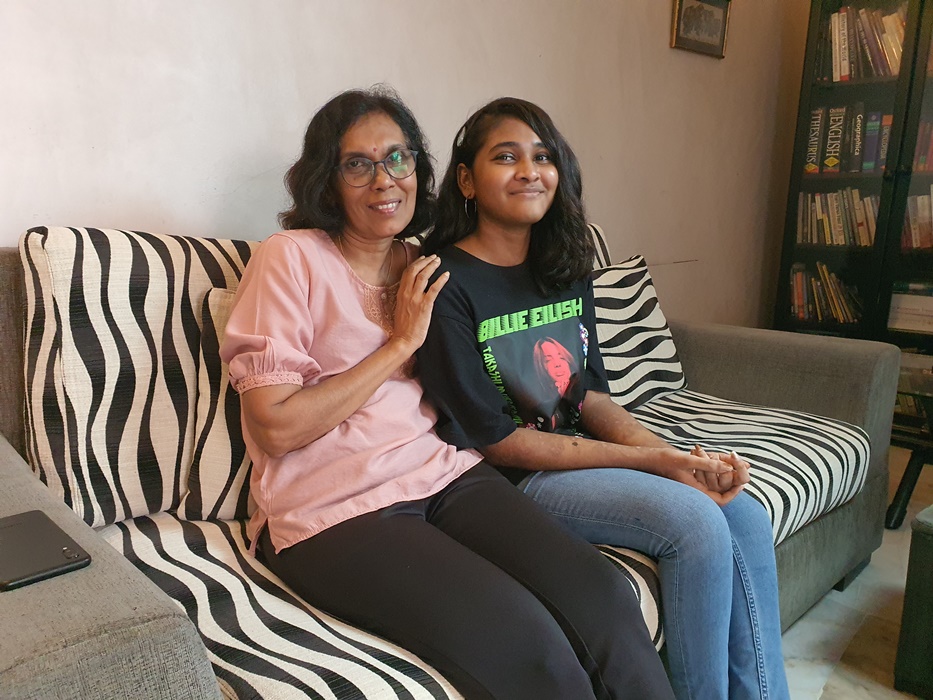
From Right: Ashvini and mum, Gouri
There is indeed a lot of misinformation on AD, and in desperation parents try home remedies and go through frustrating self-diet eliminations, believing that the AD would go away once they identify and remove food allergens.
Seeking ways to help her daughter, Gouri, mum to 19-year old Ashvini, sought out traditional remedies at first, such as ayurvedic therapy and homeopathy. However, there was little relief to be had. “For two years, we followed the ayurvedic therapy and kept Ashvini on a vegetarian diet, with no dairy or even eggs. But even so, it didn’t get better. We would just end up back at square one,” said Gouri.
Ashvini was around two years old when she was diagnosed with AD, recalls Gouri. Apart from prescribing steroid creams, the doctor said it would likely subside as she grew older. As the episodes came and went over the years, Ashvini’s parents were not overly concerned. However, for Ashvini, her condition peaked at 15 years, making it difficult to even leave the home at times.
“It was mostly painful and itchy. I just wanted it to end. It’s a bit hard to explain, over and over, why you can’t go out. Thankfully, my friends are quite understanding and didn’t treat me any differently. Sometimes, since I couldn’t go out, they would come and visit me instead.”
Finally, an uncle, a consultant dermatologist based in Kuching, suggested they meet with another consultant dermatologist here who was able to recommend a comprehensive course of treatment. Ashvini was then recommended to try a new treatment called biologic therapy. Recently approved for adolescents, it helps to reduce the inflammation that triggers AD flare-ups, with improvement in as little as a month, though experts advise that it may take up to 12 months for the skin to recover.
Speaking on behalf of parents, Gouri added, “It can be very challenging to look after a child with AD. We tried so many things but it always came back, and we saw that some parents went to drastic lengths to find a solution. But it’s important not to give up hope because there are things that can help. We are very thankful for the Consultant Dermatologist who has been very supportive and understanding. He gave us hope and now Ashvini is so much better.”
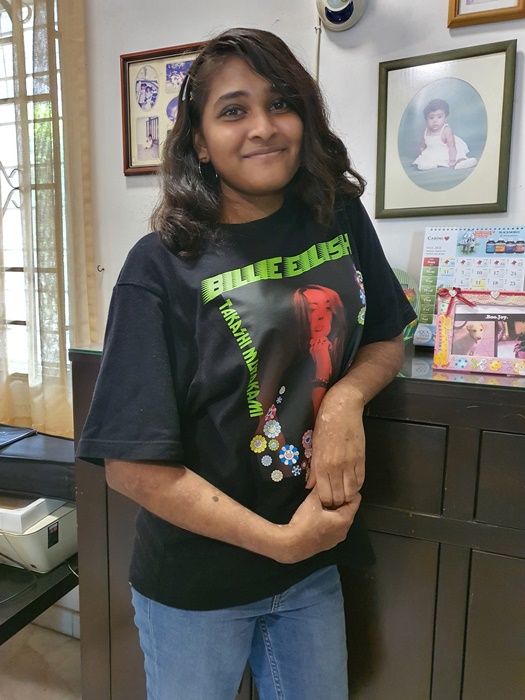
With the AD more controlled and having just finished her A levels, Ashvini has much to look forward to where her life is uncovered with families and friends. Catch her story in this video here:
Helping Adolescents with AD
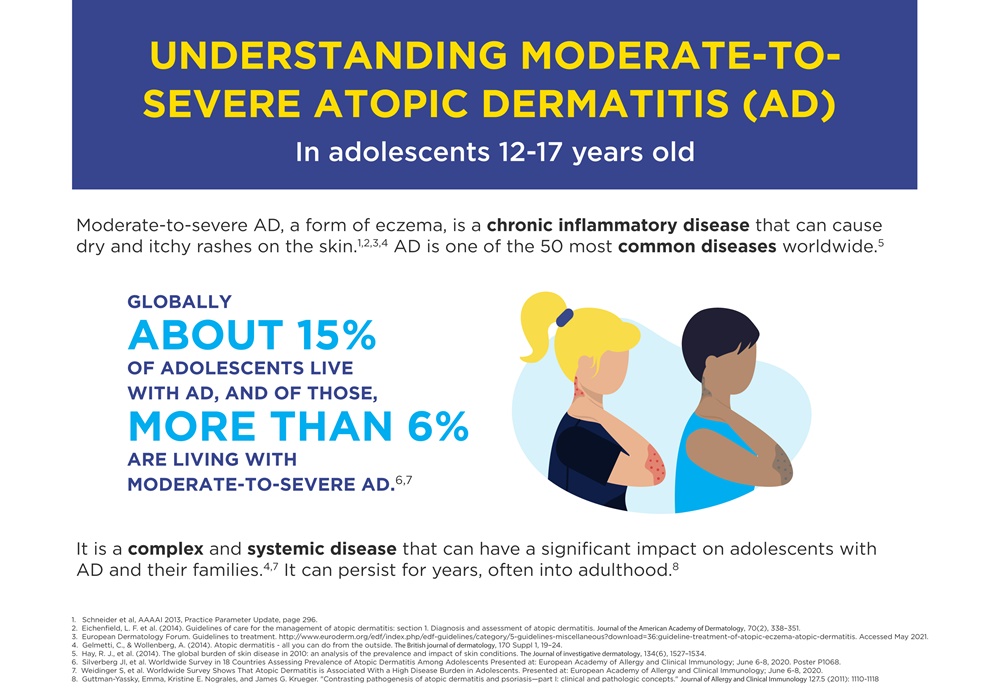
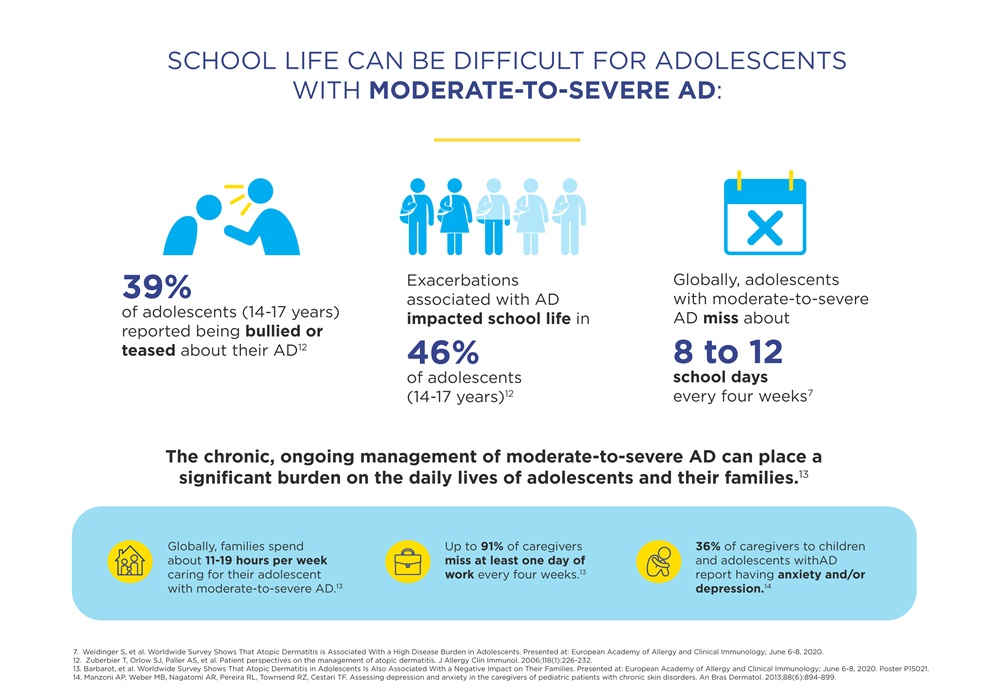
It is unclear how many Malaysian adolescents have AD[ii], but some estimates place it between 5-15%, with many among them experiencing anxiety, stress and reduced quality of life.[iii] This makes it essential for adolescents to manage AD effectively, in order to reduce its impact on their day-to-day lives, which may include: [iv] [v]
- Stress from school, especially when facing important examinations, as these can contribute to flare-ups
- Having difficulty sleeping due to itching or discomfort caused by AD
- Feeling lonely, insecure or embarrassed to socialise because of their appearance
- Getting frustrated by recurring flare-ups

“While AD often begins in childhood, when parents are the primary caregiver, it eventually becomes necessary for them to manage their own care. This means it is essential for parents to receive the appropriate medical advice at the earliest stages and teach their children to follow the steps diligently as they grow older,” said Dr Leong Kin Fon, Consultant Dermatologist. “With the help of a customised AD management plan, parents play an important role in setting the foundations for effective AD management that can help to reduce the frequency and severity of their child’s AD.”
An AD management plan is likely to include behavioural factors such as avoiding the urge to scratch, staying away from known triggers, applying the necessary creams and taking any medications as directed.[vi] [vii]
However, even with these measures, some adolescents with moderate-to-severe AD may find little relief. For individuals in need of other treatment options, a recently available biological therapy is now the first to be approved for use in adolescents. In its Phase 3 clinical trials, participants experienced significant improvement in the severity of AD and its symptoms.
The primary goal in the treatment of moderate to severe AD is to empower patients and to allow them to regain control of their lives, do the things they love and uncover life.
In their journey to successfully managing AD, parents should start by seeking professional help. Speak to your dermatologist to get the right information and about different ways of controlling your child’s AD:
-
You can refer to Dermatological Society of Malaysia website to look for a dermatologist nearer to you.
-
You can also learn more about AD and its management from patient groups such as the Malaysia Eczema Society and Malaysia Eczema Support Community.