






By Tan Suk Meng, TCM Practitioner, Bachelor of Science in Chinese Medicine (Hons), IMU Malaysia
As many parents out there know, a baby’s mood changes faster than the weather. One minute, they’re giggling and happy, the next, they’re fussy, crying, and refusing to eat. While some may just shrug it off as the baby is experiencing teething or going through a fussy phase and being a picky eater, Traditional Chinese Medicine (TCM) offers a different insight: your baby’s digestion is closely linked to their emotions.
In TCM, digestion isn’t just a physical process; it’s deeply connected to our emotions, especially in infants and young children whose Shen (spirit) and Zang-Fu (organ systems) are still delicate and developing.
TCM Zang Fu organ-emotion correspondence
In TCM, each Zang organ is associated with specific emotions. When a person experiences too much of a specific emotion, it is said to adversely affect the Zang organ which is connected to it.
-
Spleen: Worry, Overthinking
-
Liver: Anger, Frustration
-
Heart: Joy, Overstimulation
-
Lung: Sadness, Grief
-
Kidney: Fear
Your Baby’s Belly and Emotions: What’s the Connection?
The Spleen and Stomach work together as the core of our digestive system and are called the postnatal foundation of life. They generate the Qi and Blood required by our body after birth by breaking down the food we consume. Proper functioning of our spleen and stomach is closely linked to emotional states, especially worry and overthinking, which can weaken the Spleen. Yes, even babies go through emotional upsets, although they might express them differently.
In babies, the Spleen Qi is still immature and weaker; hence, their digestive and emotional systems are more delicate and easily affected by internal and external factors. Their Shen (spirit) is also still developing, which causes babies to be highly sensitive to emotions in their environment, even enabling them to sense the moods of their caregivers.
When a baby is stressed, either from an unfamiliar environment, a disrupted routine, or even sensing tension from parents, it can cause the normal flow of the Spleen and Stomach Qi to be disrupted. This results in symptoms like poor appetite, bloating, loose stools, or constipation. It could be why your little one is refusing milk or food after a particularly restless day.
Besides that, when digestion is weak and there is insufficient production of Qi and Blood, the Heart and Shen are unable to be nourished, leading to emotional disturbances like restlessness, irritability or clinginess. According to the five-element theory in TCM, the Liver (Wood) and Spleen (Earth) have a mother and child relationship, whereby the Liver is the mother, while the Spleen is the child. The Liver is closely related to our emotions and governs the free flow of Qi throughout our body.
If the Liver Qi becomes stagnant or excessive due to excessive emotional ups and downs, it tends to restrict the Spleen’s ability to function properly, which may cause symptoms such as poor appetite, bloating, loose stools, and similar digestive issues. This pattern is known as Liver-Spleen disharmony.

Signs Your Baby’s Belly is Stressed
Wondering if your baby’s digestion is affected by their emotions? Look out for these signs!
- Sudden loss of appetite
- Bloated or hard tummy
- Spitting out their food or vomiting
- Unusual irritability or clinginess
- Restlessness or constant fidgeting
These symptoms may often appear after a stressful event, a trip away from home, a family argument, or even due to changes in their routine. In TCM, this is due to the Spleen Qi getting disrupted by the emotional upset, which hinders it from transforming and transporting the food and water into essential nutrients for the body.
What Can Parents Do?
The good news is, TCM isn’t all about complicated treatments or mystery herbs (although those can help too). It’s more about a holistic approach and creating a steady, calm environment using natural, simple techniques to restore the balance.
1. Create Calm, Predictable Routines
Babies prefer consistency. Having regular mealtimes, nap times, and play times helps their emotional and digestive systems feel safe and secure.

2. Maintaining Good Moods Around the Baby
Babies are like emotional sponges. If their parents or caretakers are constantly anxious, stressed, or tense, it can transfer to the baby. Before approaching your child, take a few deep breaths or step outside for some fresh air if you are feeling agitated.

3. Warm, Simple Foods
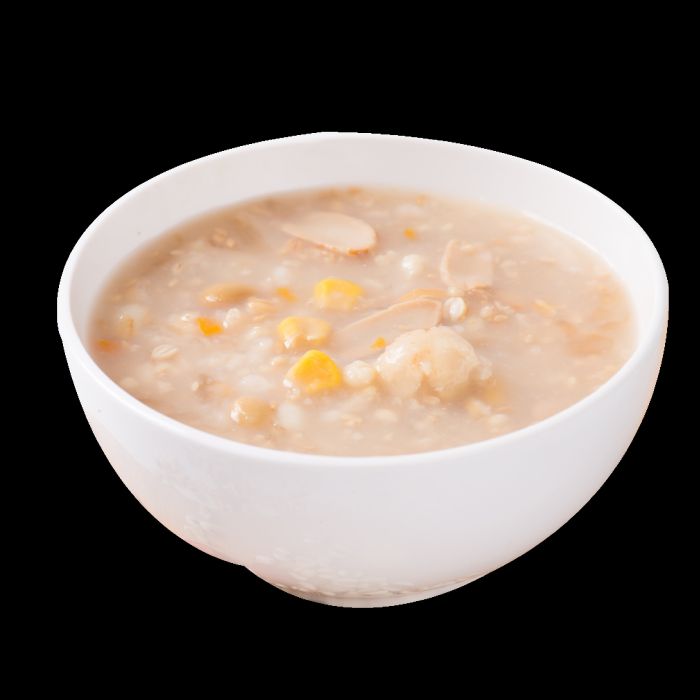
If your baby is old enough for solids, you may opt for foods that are warm and easy to digest, such as pumpkin congee, millet porridge, and stewed sweet potatoes. These foods aid in warming the Spleen and Stomach and help with digestion. Cold, raw or greasy and fried food tends to weaken the Spleen, hence worsening digestion.
4. Gentle Baby Massage (Paediatric Tuina)
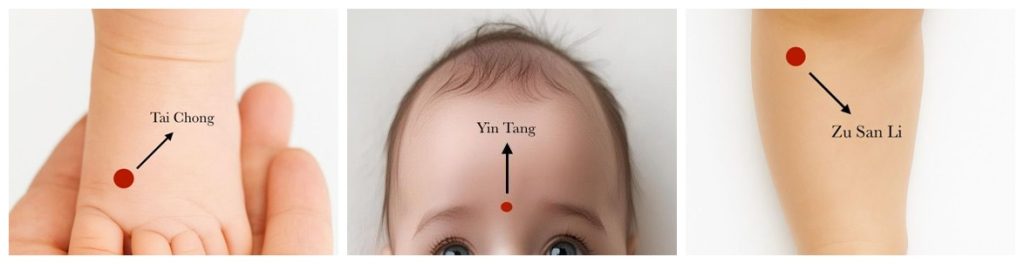
Before meals or bedtime, try gently massaging these acupressure points, which help in calming the mind, soothing the Liver, and boosting the digestive system. The first one will be EX-HN3 Yin Tang point, which is located between the middle of the eyebrows. It’s a point which aids in calming the mind and soothing their little spirits. The second acupressure point will be LV3 Tai Chong, and it is located at the depression between the bones of the first and second toes, at the base. It aids in regulating and soothing the Liver Qi, hence assisting in regulating our emotions.
The following acupressure point is ST36 Zu San Li, and it can be located on the lower leg, around four finger widths below the knee, on the left side of the shin bone. For each acupressure point, you may gently massage the points repeatedly for 1-3 minutes or around 50 times.
Why It Matters
All in all, a well-functioning digestive system is not just about preventing tummy aches. In TCM, it’s the foundation of energy, growth, good immunity and emotional stability. A happy belly means a happy baby. Also, as babies are unable to tell us what’s going on in words, watching out for their digestion is one of the best ways to gauge their emotional health.
So, the next time your little one is being fussy at the table or skips a meal, think beyond the spoon. Start considering their emotions, the household’s energy, and events that happened throughout the day. With some TCM wisdom, you’ll be well on your way to relaxing both your baby’s spirit and belly.