





Did you know?
Between birth and five years of age, the human brain increases approximately 3.5 times in its total mass.
Docosahexaenoic acid or DHA is an omega-3 fatty acid used to improve brain and eye health in children. Similar to how calcium is needed for strong bones, DHA is like food for the brain to keep it functioning to the best of its ability.
During the first five years of a child’s life, it is critically important that infants and children consume adequate amounts of DHA in their diet to support this period of rapid brain growth and development, making it easier, quicker, and more efficient for your child’s nerve cells to communicate.
DHA’s Major Role in Brain Development
DHA is the most abundant omega-3 in your brain and plays a critical role in its development and function. It is mainly found in the gray matter of the brain, and the frontal lobes which are responsible for processing information, memories, and emotions. They are also important for sustained attention, planning, problem solving, and social, emotional, and behavioural development.1,2

What Happens When Children Don’t Get Sufficient DHA?
DHA is extremely important for brain tissue growth and function, especially during early childhood. Studies have shown that, lower DHA concentrations were associated with3:
- Poorer reading ability
- Poorer working memory performance
- Unstable emotions and behavioural problems
DHA deficiency in early life has also been associated with learning disabilities, ADHD, aggressive hostility, and several other disorders.4
How to Get DHA?
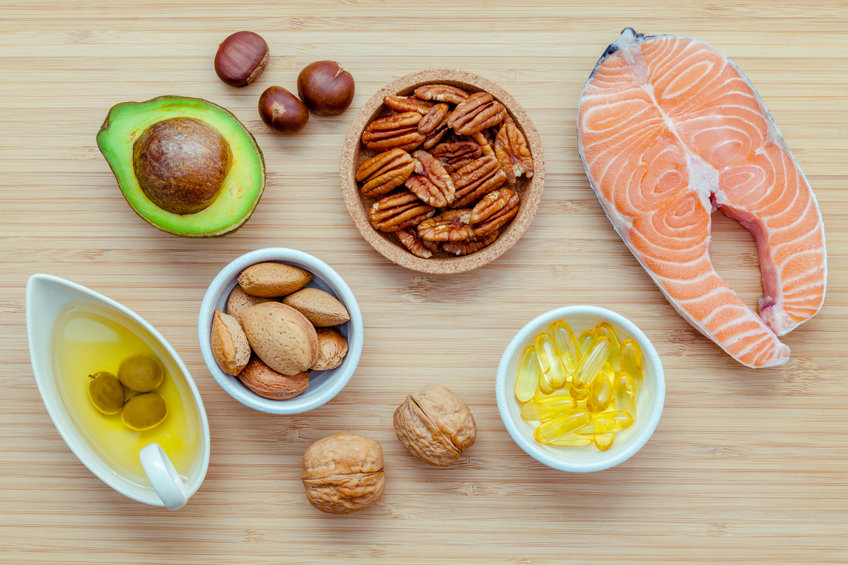
DHA is mainly found in organ meats, flaxseeds, walnuts and fatty fish such as salmon, mackerel and tuna, which are not the usual type of food that children consume on a daily basis.
According to WHO, 2-4-years-old children require about 100-150mg of DHA per day.5 Most children consume less than optimal levels of DHA because foods that naturally contain DHA are limited. In addition, picky and unbalanced eating habits as well as food allergies make it difficult for parents to ensure their children are obtaining optimal levels of DHA.
Hence, incorporating a DHA supplement into their diet is important.
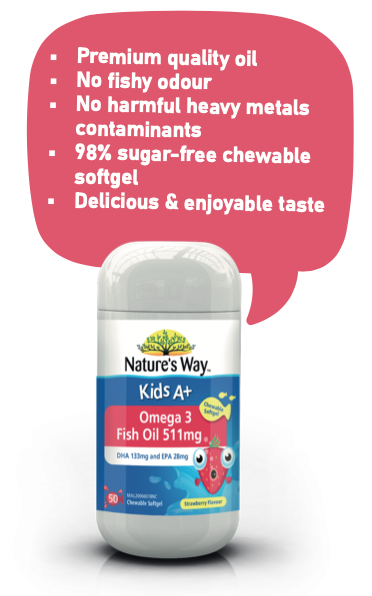
Nature’s Way Omega 3 Fish Oil 511mg
Nature’s Way Omega 3 Fish Oil 511mg is a great supplement to support your child’s development of brain health, cognitive function, learning and information processing.
It is high in DHA that is produced exclusively from Tuna harvested from deep cold sea. Their fish oil undergoes ‘deodorized’ technology to ensure no risk of fishy odour. Nature’s Way winning taste profile combining Strawberry with berry burst are also a delicious treat that kids are willing to take and would even love.
With Nature’s Way Omega 3 Fish Oil 511mg you can be confident that you’re giving your child a safe and sufficient amount of DHA to support their rapid brain growth and development.
Reference:
1 Front Aging Neurosci. 2015 Apr 21;7:52. doi: 10.3389/fnagi.2015.00052. Long-chain omega-3 fatty acids and the brain: a review of the independent and shared effects of EPA, DPA and DHA Simon C Dyall PMID: 25954194 PMCID: PMC4404917
2 Prostaglandins Leukot Essent Fatty Acids. Nov-Dec 2007;77(5-6):247-50. doi:10.1016/j.plefa.2007.10.016. Epub 2007 Nov 26.The influence of dietary docosahexaenoic acid and arachidonic acid on central nervous system polyunsaturated fatty acid composition J Thomas Brenna 1, Guan-Yeu Diau
3 Montgomery P, Burton JR, Sewell RP, Spreckelsen TF, Richardson AJ. Low blood long chain omega-3 fatty acids in UK children are associated with poor cognitive performance and behavior: a cross-sectional analysis from the DOLAB study. PLoS One. 2013;8(6):e66697
4 Arch Dis Child. 1997 May;76(5):421-4. doi: 10.1136/adc.76.5.421.Developmental quotient at 24 months and fatty acid composition of diet in early infancy: a follow up study PMID: 9196357 PMCID: PMC1717175
5 Interim Summary of Conclusions and Dietary Recommendations on Total Fat & Fatty Acids From the Joint FAO/WHO Expert Consultation on Fats and Fatty Acids in Human Nutrition, 10-14 November, 2008, WHO, Geneva https://www.who.int/nutrition/topics/FFA_summary_rec_conclusion.pdf