


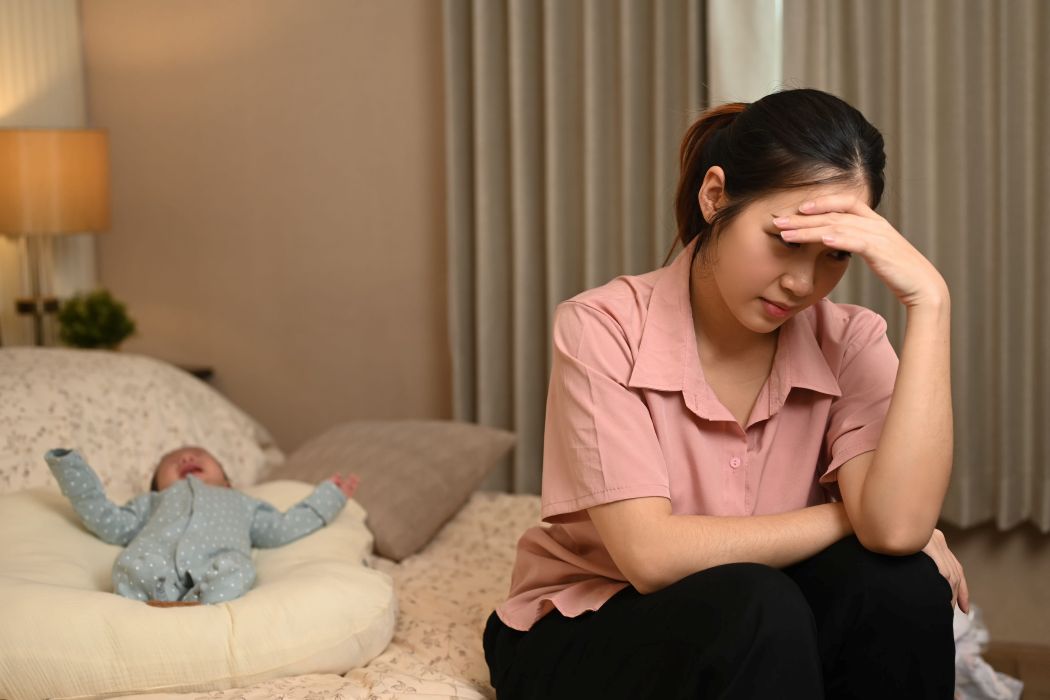


Everyone talks about the joy of having a baby. Not enough people talk about what happens when that joy doesn’t show up on time. You expected to feel overwhelmed with joy, right? Maybe a little exhausted, sure, but you thought you’d shine in all the postpartum glow. Instead, three days later, you are crying your eyes out at 2 am, slightly disgruntled at your husband (and everybody else), and you genuinely cannot tell why.
First things first: you are not broken, or ungrateful..
What you’re likely experiencing is what healthcare providers call the “postpartum blues” or “baby blues,” and it is incredibly common.
What’s Actually Happening to Your Body and Mood
Up to 80% of new mothers experience mood swings, sadness, and anxiety in the days immediately after childbirth.1 The culprit? A hormone crash of epic proportions. After you give birth, levels of oestrogen and progesterone drop quickly, which can lead to mood swings.
Research also points to thyroid hormones playing a role. A study titled The Relationship Between Maternity Blues and Thyroid Dysfunction found that free triiodothyronine (FT3) levels were significantly lower in women with maternity blues at five days postpartum compared to normal controls, suggesting that thyroid hormone dips in the early postnatal period may contribute to the low mood and fatigue many new mums experience.2
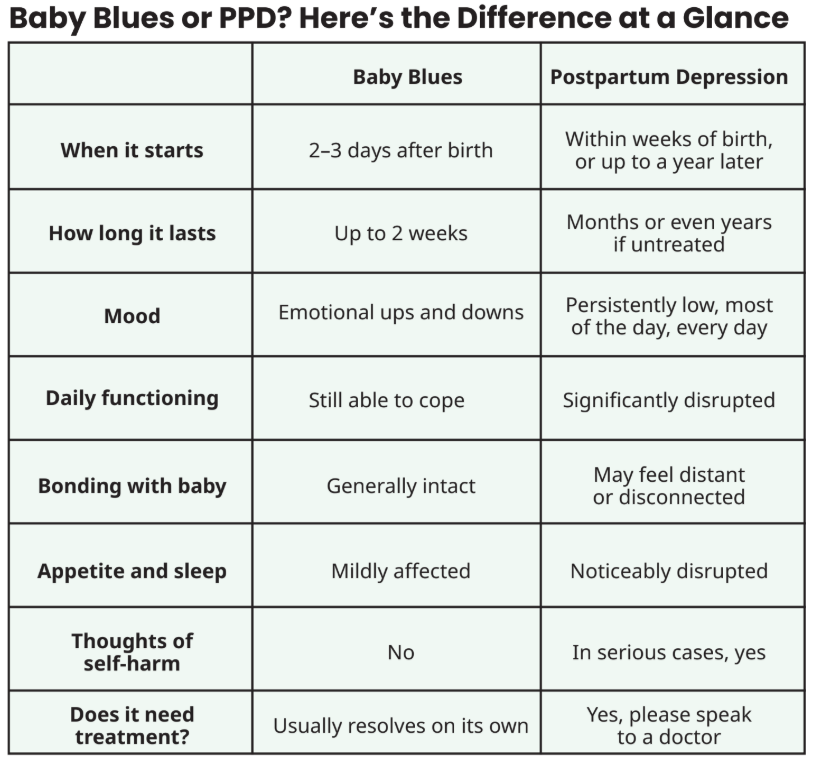
The baby blues typically kick in two to three days after delivery and, crucially, they pass. Baby blues last up to two weeks after a baby is born. With baby blues, you’ll have more emotional ups and downs, but you can still get through your day. You can still care for your baby. You are – despite the midnight crying sessions – functioning.
So far, so normal. But here’s where it gets important.
When “Normal” Stops Being Normal
If you’re still feeling this way past the two-week mark, and especially if things are getting worse rather than better, that’s your body asking for help. More accurately, that is Postpartum Depression (PPD), and it is an entirely different story.
Unlike the postpartum blues, which typically resolve within a few weeks and do not cause significant functional impairment, postpartum depression is more severe. It can last for months, if untreated, resulting in significant mental health dysfunction.3
Postpartum depression is not a character flaw. It is a medical condition, and one that is far more common than most Malaysian moms realise. The prevalence of PPD in Malaysia ranges from 14.3% to 31.7%.4 That is potentially almost one in three mothers going through the same gut-wrenching experience. You are very much not alone in this.
Postpartum Depression(PPD) is a medical condition and it is quite common than most Malaysian moms realise. The prevalence of PPD in Malaysia ranges from 14.3% to 31.7% (almost one in three mothers)

What Does PPD Actually Look Like?
Here’s the thing about postpartum depression: it doesn’t always look like sadness. Sometimes it looks like rage, other times, numbness. It can also feel like you’ve got everything figured out, and is still somehow hollowed out on the inside.
Watch out for these symptoms, especially if they’re showing up most of the day, every day:
- Persistent feelings of hopelessness or emptiness
- Difficulty bonding with your baby
- Extreme fatigue that goes beyond normal newborn sleep deprivation
- Withdrawing from family and friends
- Losing interest in things you used to enjoy
- Changes in appetite
- In more serious cases, thoughts of harming yourself or your baby
One important thing to know: PPD doesn’t only show up in the first few weeks. Unlike baby blues, PPD can occur up to one year after giving birth.
So if you felt fine at first and then started spiralling at month four, that still counts and still deserves attention.
The Malaysian Side of PPD Nobody Talks About
Local research has identified some risk factors that hit close to home for Malaysian moms. According to a study published in PubMed Central,5 Malaysian mothers face a significantly higher risk of PPD if they experienced:
- Depression during pregnancy
- Constant worry about their newborn
- Marital stress or financial pressure
- An emergency delivery, which doubles the risk
Here’s one finding that might actually make you feel better, though: women whose husbands helped with infant care and who felt satisfied in their marriage had a significantly reduced risk of postnatal depression.6 So the next time you feel guilty about asking your husband to handle the 3 am feed, don’t. That is not you being needy. That is literally preventive mental healthcare. Plus, it’s his baby too. Get him on board!
And yet, despite all of this, many Malaysian mothers still don’t seek help. The fear of being seen as a bad mom, the pressure to appear grateful and coping, the cultural expectation to just push through, it all adds up to one thing: silence.
Up to 50% of postpartum depression cases remain undiagnosed, partly because of the stigma surrounding the condition.7 Left untreated, PPD can last for months or even years, interfering with a mother’s ability to bond with and care for her baby. Getting help is not giving up. It is, in fact, the most motherly thing you can do.
Many PPD cases remain undiagnosed. Left untreated, it can last for months or even years, interfering with a mother’s ability to bond with and care for her baby.

So, when should you seek SOS?
If your low mood, anxiety, or emotional fog has lasted more than two weeks, please talk to your doctor. Do not wait for your next scheduled appointment. Malaysia’s Ministry of Health clinical practice guidelines recommend that screening for PPD should be done between 6 and 12 weeks postpartum and repeated at least once within the first year. If nobody has screened you at your postnatal visits, it is absolutely okay to bring it up yourself.
Motherhood is hard enough as it is. You do not have to earn the right to feel better or reach rock bottom before you’re “allowed” to ask for help. If you are still struggling past the two-week mark, that’s your cue. Take it.
If you or someone you know is struggling, speak to your OB-GYN, GP, or nearest Klinik Kesihatan. You can also reach Befrienders KL at 03-7627 2929 (available 24 hours), or the Talian Kasih helpline at 15999.
Reference:
1. https://share.upmc.com/2025/05/postpartum-vs-baby-blues/ 2. https://pubmed.ncbi.nlm.nih.gov/9564106/ 3.https://www.ncbi.nlm.nih.gov/books/NBK519070/ 4. https://pmc.ncbi.nlm.nih.gov/articles/PMC10389253/ 5. https://pmc.ncbi.nlm.nih.gov/articles/PMC8577760/ 6. https://pubmed.ncbi.nlm.nih.gov/25466643/ 7. https://www.ncbi.nlm.nih.gov/books/NBK519070/