



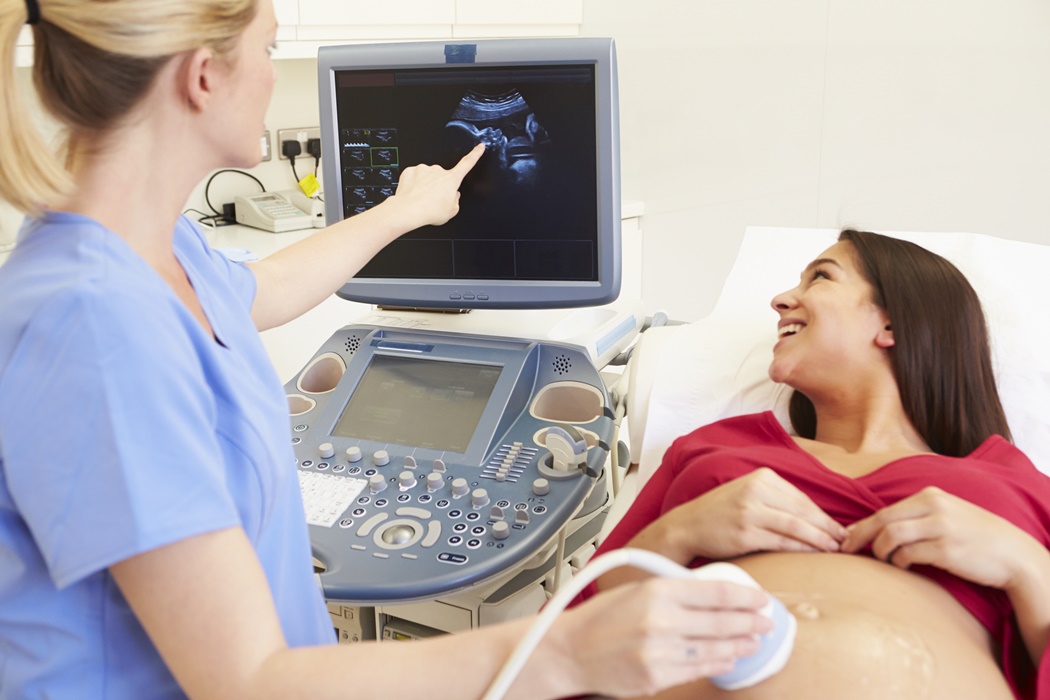


Well, now baby is on his way and you are all ready to go!
It’s an exciting moment for both you and your husband.
Soon you will begin a new stage in your family’s life.
You know all about the stages of labour and delivery and are prepared for anything. But what happens to your baby during birth? What about after birth? It seems that your baby has a lot of hard work to do himself!
It’s not just you who are getting ready for your baby’s arrival — your baby has a lot of hard work to do too!
Your Baby Is Getting Ready
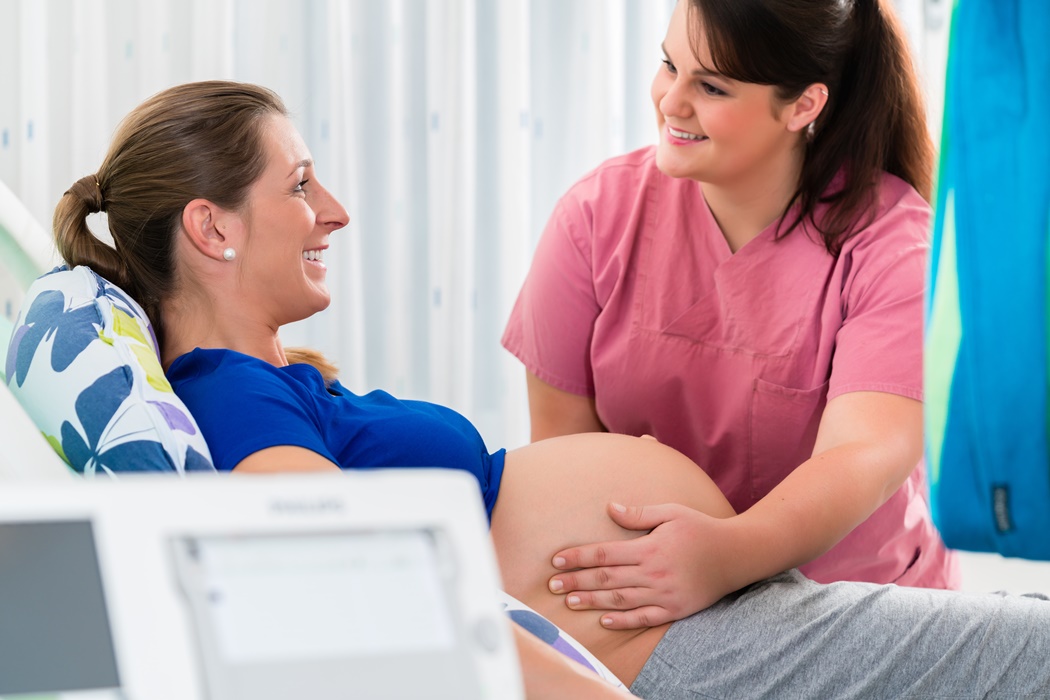
While you are busy getting ready for the arrival of a lifetime, your baby is also very busy getting ready for his trip.
By the time labour arrives, or is induced, your baby has already dropped and is making his way down the birth canal.
Travelling through the birth canal is not always as easy as it sounds.
In fact, it can be quite stressful for your baby as he is under a lot of pressure and must go without oxygen temporarily.
Despite this stress, a vaginal birth is actually better for your baby.
Studies have shown that giving birth by Caesarean section increases a child’s risk of developing respiratory problems compared to babies born vaginally.
However, sometimes a Caesarean section is warranted.
When complications arise during natural childbirth, a Caesarean section can actually save the life of both you and your baby.
Additionally, mothers having multiple births are also often encouraged to have a C-section.
The Adrenaline Rush
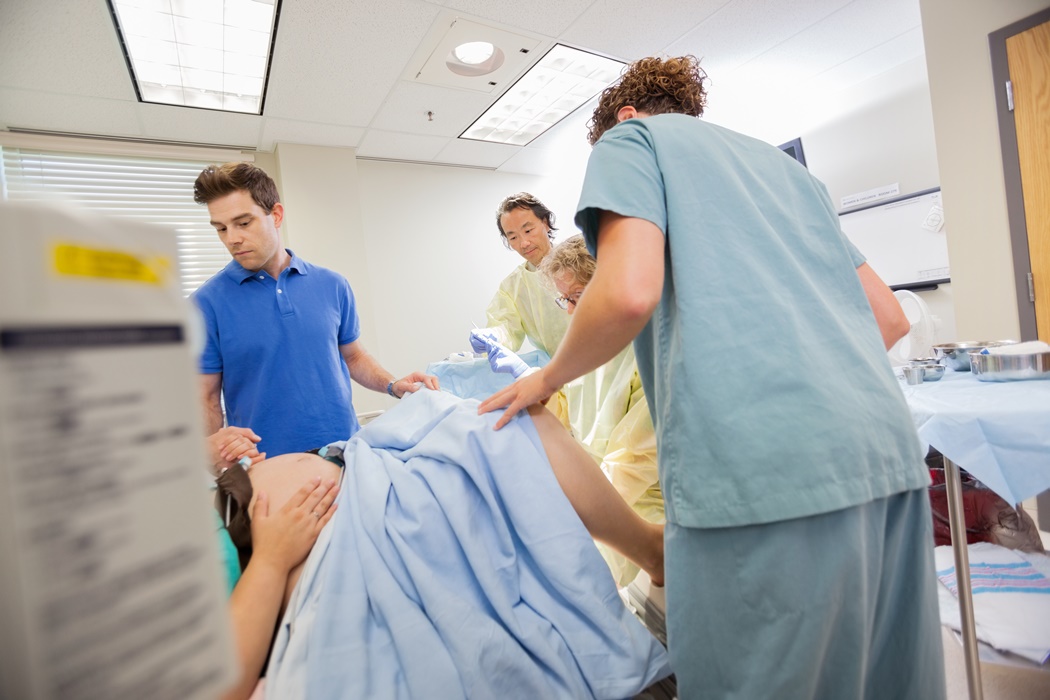
While your baby travels through the birth canal, his body begins to produce two hormones; namely the adrenaline and noradrenaline.
Your baby will never again produce such high amounts of these two chemicals.
Both chemicals help to make your baby’s trip a successful one.
The adrenaline aids your baby in adjusting to the air environment he will soon encounter.
This chemical opens up his lungs and dries out his bronchi, preparing him to breathe.
The noradrenaline works to slow your baby’s heartbeat.
This helps him to go without oxygen for a prolonged period as he works his way out of the birth canal.
In general, your baby should not have too much trouble making his way into the world.
His body should pass easily through the birth canal. His head, however, may be a different story.
This is actually the most troublesome part of your baby to make its way out of the birth canal.
Luckily, the skull is not completely hardened at birth, allowing your baby’s head to be gently altered in order to help it pass through.
Post-birth
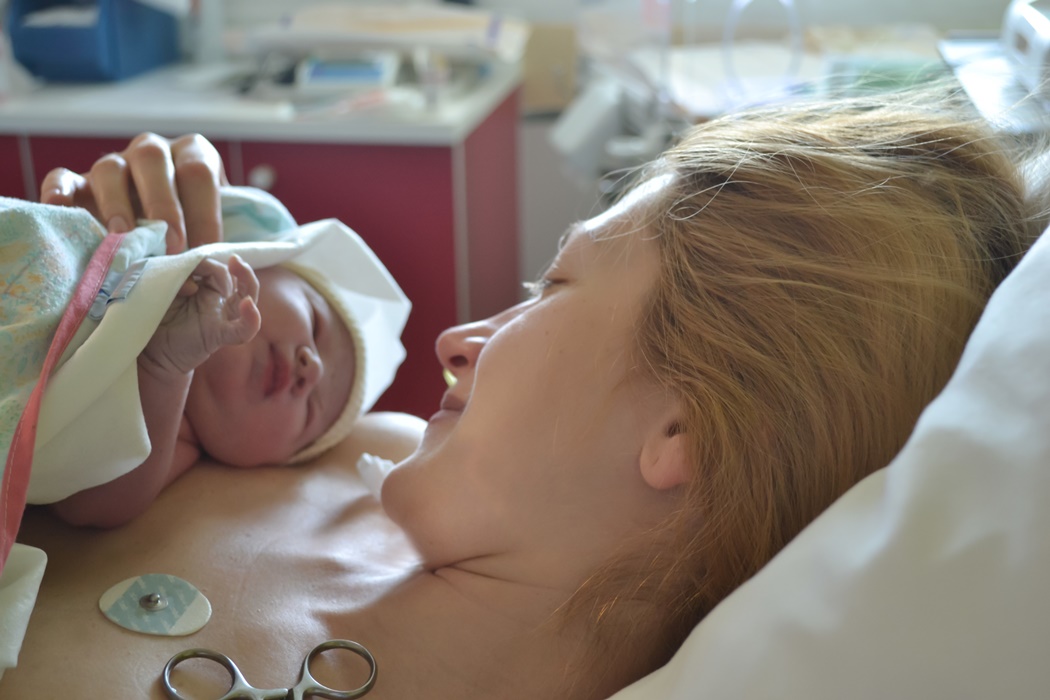
Your baby has now arrived! He has made his journey down the birth canal and his head has just entered a bright new world.
Before the shoulders appear, the doctor will immediately suction your baby’s mouth and nose in order to help him breathe.
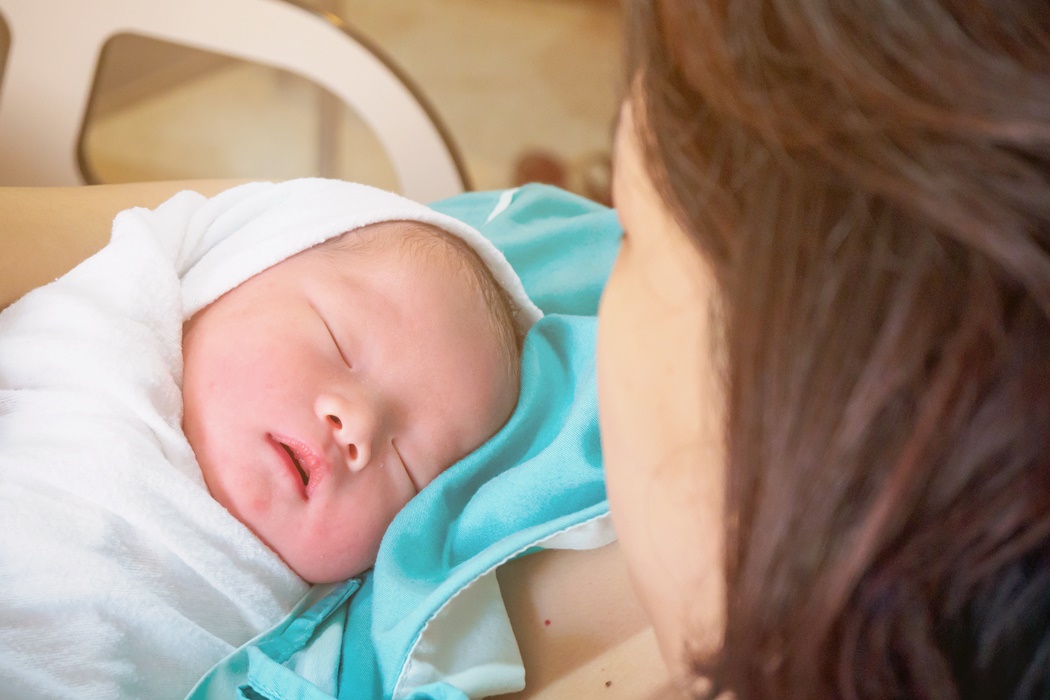
After your baby’s entire body emerges, he will be placed on your abdomen with his head close to your chest.
Your baby’s skin will be covered in a creamy substance, called vernix, which may be mixed with some blood.
His skin may also look a little blue, so do not be surprised. You will be able to bond right away with your little one.
Newborns do not have very good temperature control, so he must be kept warm and dry.
He will be covered in a warm towel and given a little cap to wear, which will keep heat from escaping from his head.
You and your new little bundle of joy will all be given identical ID tags, so do not worry about any mix-ups.
The doctor will then clamp your baby’s umbilical cord in two places.
Your husband may be quite excited at the prospect of cutting between the two clamps!
A vial of blood will be collected from your baby’s cord, in order to determine his blood type and to run other necessary tests.
If your baby is still breathing with a lot of mucous, his nose and mouth will probably be suctioned again.
In the first few minutes after birth, your baby will be given a series of tests designed to check his breathing, heart rate, colour, reflexes, and muscle tone.
These tests are part of the Apgar assessment and will help determine whether your baby needs any extra attention.
The First Hour

The first hours of your baby’s life will be busy. He will be given antibiotic drops in his eyes to prevent any infection.
Bacteria that he was exposed to during or after birth could cause serious problems, even blindness.
Your baby will also be given an injection of Vitamin K to help his blood clot.
Your baby will be weighed and his length and the circumference of his head will be measured.
After three hours at a stable temperature, the baby will have his first bath!
He will be sponged down and his hair will be washed, if necessary.
He will also receive a complete examination in the nursery.
Even if your birth plan involves having a home birth, your baby will still have all the appropriate tests and care that he needs after birth.
You will just be able to enjoy and bond with your baby in the comfort of your own home.
Homeward Bound
Before you and your baby embark on your journey home, a few more tests need to be completed to keep your baby healthy.
After 48 hours, a metabolic screen is done. Your baby’s heel will be pricked with a tiny needle to collect a drop of blood.
This blood is then tested for phenylketonuria (PKU) and hypothyroidism.
Your baby will probably also receive his first Hepatitis B vaccine before you are discharged.
If you or a member of your family is a carrier of Hepatitis B, this vaccine will be given much earlier.
If your HIV status is unknown, your baby will receive an HIV test as well.
Lastly, hearing tests may be done to check out your baby’s ears. After these tests, you and your baby’s homeward bound begins!