




It is one of the things parents dread the most; having to talk to their child about sex.
The popular and convenient approach for most parents is to simply ignore the subject completely and assume that their children will learn this from their friends, through the television, or the internet.
The problem is that the way “sex” is portrayed on the popular media is often distorted and skewed, and their friends in school may have unhealthy beliefs about what sex is.
Sex education is not a one-off process, and it cannot be covered in one conversation.
Parents should continue to connect with their children as they grow up and face different issues relating to their sexuality.
For example, when our children become teenagers, conversations about sexuality may include talks on appropriate dating behaviour, and how to draw boundaries in physical intimacy.
However, for this article I will focus on how to talk to young children about sex.
More and more parents today are beginning to educate their children about their sexuality from a young age. In the last few weeks I was able to talk to several parents on how they have tried to educate their children on sex.
Learning about parts of the body and their functions
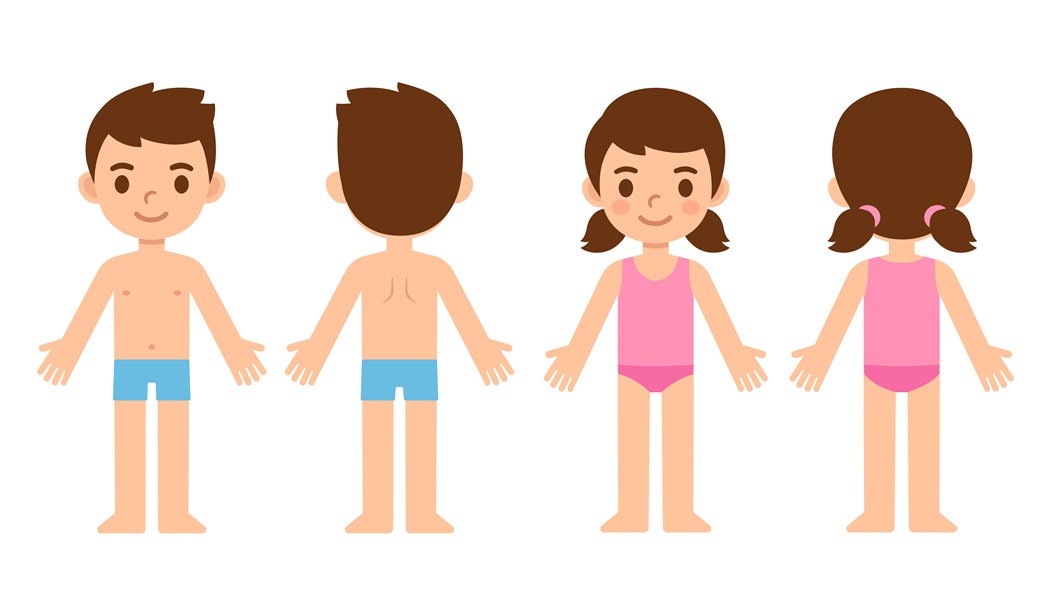
The starting point for sex education is an understanding of the human body.
Sharon, a mother of a six-year-old daughter notes that “many Malaysian children don’t even know the proper names of their body parts.
” When her daughter was four years old, she taught her terms like ‘breast’, ‘vagina’ and ‘penis’. Mrs. David, a mother of two agrees; “how can we even start to talk about sex, when children don’t even know how to name their reproductive organs.”
While most children may not fully comprehend the reproductive process until they are nine or 10 years old, younger children can be taught to name and identify the reproductive organs as well as their functions.
Some parents when explaining the process of sex to their young children may simplify the description without going into unnecessary detail.
For example, when Rose was explaining sex to her five-year-old son she said that “babies start to grow in a mummy’s tummy when the father fertilises the egg in the mummy’s body”.
She explains, “I felt it was not appropriate to give too many details at this stage, but when he is around seven, I intend to tell him more about how things actually happen.”
Other parents take a different approach and believe that even a young child can be given the details of how the act of sex takes place.
Carrie, a mother of three shares her experience; “I used children’s books on sex to teach all my children about how the reproductive process takes place. I felt it was important from the age of five for them to fully understand how the physical act of sex takes place. So I told them about how the penis injects semen into the female vagina and how this leads to the fertilisation of the egg.”
Regardless of how much detail we are comfortable in telling our children, the important thing is that children should be given the basics about sex from a young age.
Learning about modesty
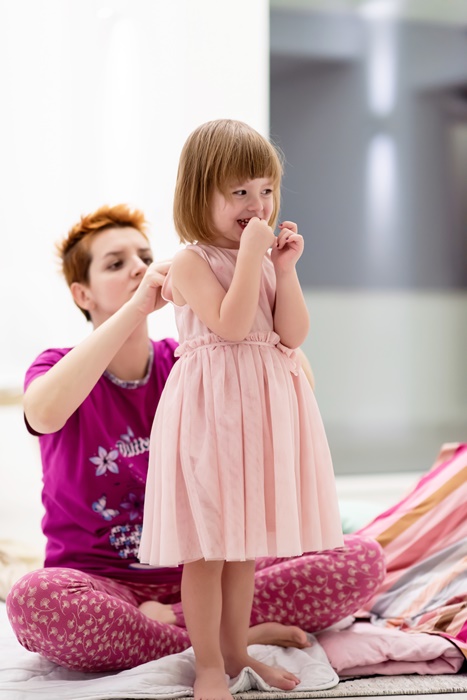
Sex education needs to be appropriate to the local culture.
That is why an important part of the biology lesson is explaining how males and females are physically different and why we need to practice modesty in the way we dress and behave.
Puan Zaiton explained to her son and daughter that because boys and girls are different, there are certain parts of our bodies we must not show to each other.
“I told them that that is why we wear clothes; and that is why it is important not to show other people certain parts of our body.”
Mrs. Lim agrees; “It is important for children to understand that there are certain parts of their bodies that they should not show to other people unless it is their parents or appropriate professionals, like doctors.” This is part of a child’s education about what are appropriate and inappropriate behaviours. For example, parents can teach their children that peeping while others are in the bathroom, or are changing is not acceptable.
Learning appropriate and inappropriate behaviours
Several kindergartens and parent groups have also started to educate children about their rights to protect their body.
This is important to defend children against forms of molestation and sexual abuse by adults who may take advantage of a child’s ignorance on what is acceptable and what is not.
“It is important for children to understand that no one else has a right to touch them in ways they are not comfortable with,” says Kelly, a mother of three daughters, “they must know that they can say NO when an adult is touching them inappropriately.”
Using books as prompts for discussion

Books can be helpful in helping parents explain sex to their young children.
They offer help to parents who may feel awkward and who may struggle to find the appropriate words.
Children’s books, with their illustrations and simple language also help the child understand things clearly.
The following are some books that are suitable for children aged 4-7 years.
- A Kid’s First Book About Sex; by Joani Blank and Marcia Quackenbush; Down There Press, 1993
- Mommy, Daddy, Where Do Babies Come From, by Grace Ayad and Richard Panzer, Benny Andersson (illustrator); Center for Educational Media, 1997
- Mommy Laid an Egg! Or Where Do Babies Come From, by Babette Cole; Chronicle Books, 1996
- Where Do Babies Come From; by Margaret Sheffield; Alfred A. Knopf, 1987
The following are some books that are suitable for children aged 6 – 10 years.
- Asking About Sex and Growing Up; by Joanna Cole; Econo-Clad Books, 1999
- Where Do Babies Come From: For Ages 6 to 8 and Parents; by Ruth S. Hummel; rev. ed.; Concordia Pub. House,1998
- Where Did I Come From; by Peter Mayle; Lyle Stuart, 2000
Conclusion
Parents must take responsibility for teaching our children about sex.
We are in the best position to explain sex in a way that is appropriate for our culture and our family beliefs.
Children from a young age have a natural curiosity about their bodies.
Teaching them about sex not only helps them protect themselves from inappropriate behaviour but also teaches them to respect the modesty of others.