






Does your child often sleep with their mouth open? Snore at night? Take a long time to finish meals, prefer softer foods or seem to struggle with chewing?
Perhaps you have also noticed unclear speech, frequent drooling or that their tongue never seems to sit comfortably at rest.
On their own, these little habits may not seem connected. But when several appear together, they could offer useful clues about how your child’s mouth is functioning.
After all, your child’s mouth does much more than smile.
Every day, the tongue, lips, cheeks and jaw work together to help your child breathe, eat, swallow, speak and sleep. How well these muscles coordinate can play an important role in a child’s everyday comfort and development.
This is why looking after children’s oral development can mean looking beyond their teeth.
Oral Health Is About More Than Teeth
When we think about taking our children to the dentist, cavities, brushing and growing teeth naturally come to mind.
But there is another question worth asking:
How is your child actually using their mouth?
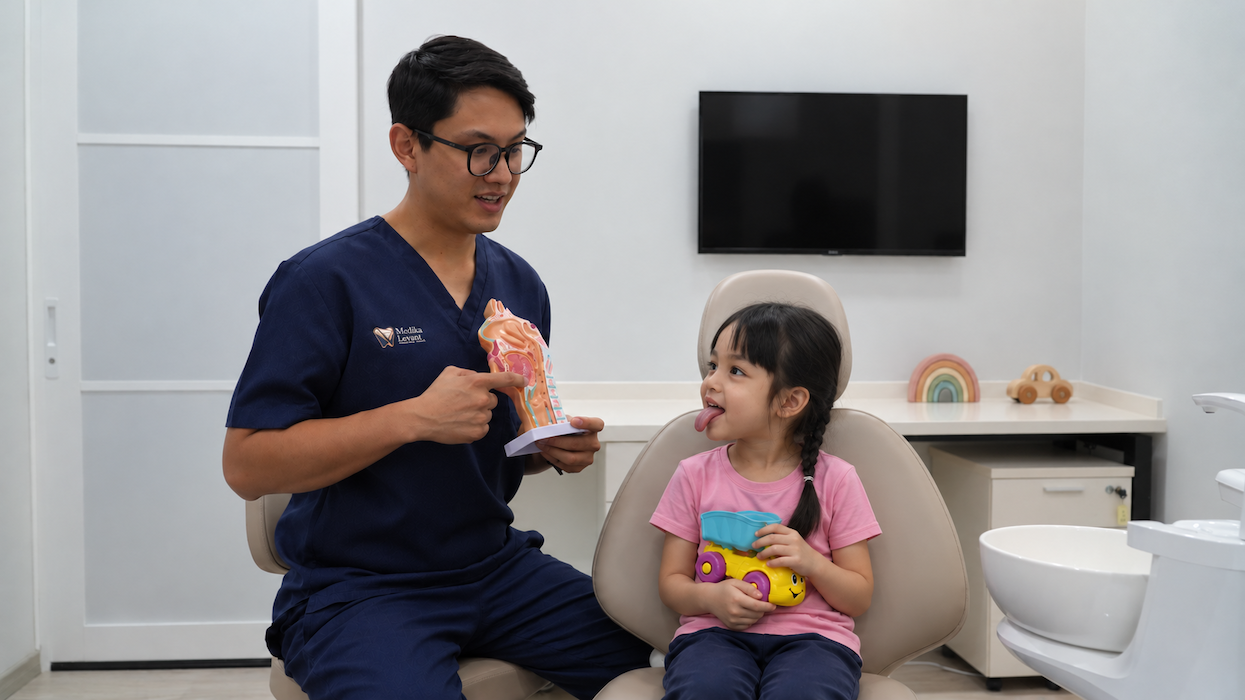
This is known as oral function. It includes how the tongue moves and rests, whether the lips can comfortably stay together, how a child breathes, chews and swallows, and how the jaw and facial muscles work together.

At Medikalevant | Dentalevant TT Clinic, this function-first approach means looking at these areas as a whole rather than focusing on one concern in isolation.
For example, instead of immediately asking whether a child has a tongue-tie, an assessment may look at tongue mobility alongside tongue posture, lip seal, nasal breathing, chewing, swallowing, oral habits and jaw function.
The aim is to understand the bigger picture first.
What Does Sleep Have to Do With the Mouth?
How your child breathes while asleep is another piece of that picture.
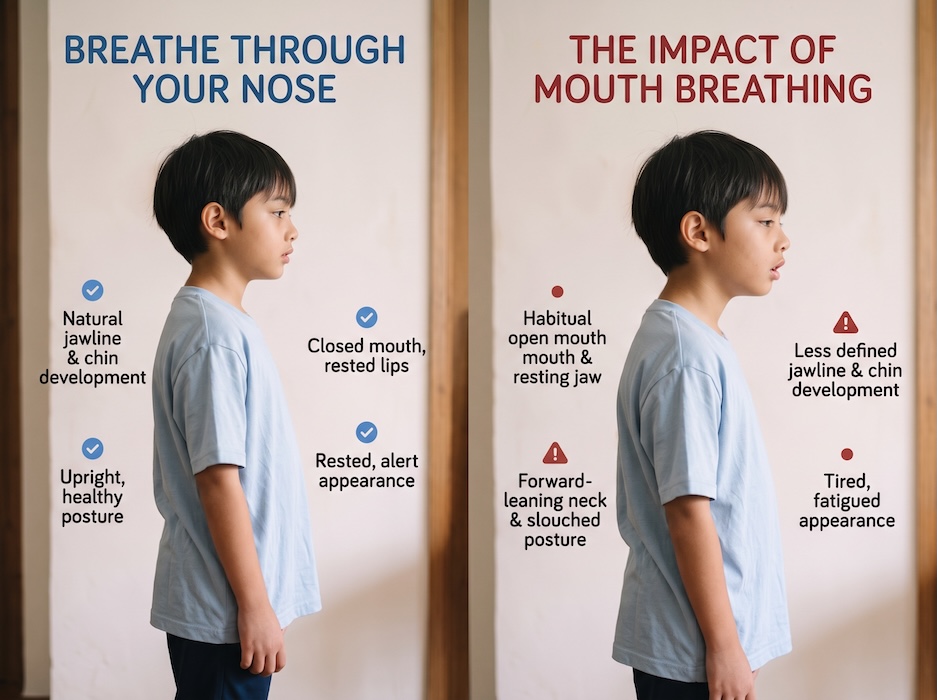
Occasional noisy sleeping may not necessarily mean something is wrong. However, patterns such as regular mouth breathing, snoring in children, restless sleep or difficulty maintaining comfortable nasal breathing may be worth discussing with a healthcare professional, particularly when they appear alongside other concerns.
Sleep-related breathing concerns can affect the quality of a child’s rest and may have an impact on areas such as daytime focus and growth.
That does not mean every child who snores has a tongue-tie or an oral-function problem.
Rather than trying to identify the cause yourself, parents can start by noticing patterns: How often does it happen? Does your child regularly sleep with their mouth open? Are there other feeding, speech or oral habits appearing at the same time?
Those observations can be useful during a professional assessment.
Then There’s Eating and Swallowing
Mealtimes can tell us quite a lot too.
Some children naturally eat more slowly or go through phases of preferring certain textures. But when difficulties are persistent, it may be helpful to look at how the mouth is working during feeding and eating.
Does your child have difficulty chewing certain textures? Do meals take an unusually long time? Do they seem to have trouble managing food comfortably in their mouth?
Chewing and swallowing involve coordinated movements from the tongue, lips, cheeks and jaw. An oral-function assessment can look at how these different parts are working together rather than viewing eating difficulties as an isolated issue.
The same applies to speech.
Tongue mobility and oral muscle function may be relevant to certain aspects of speech development, but speech concerns can have many possible causes. Where appropriate, a child may also need to be referred to a speech or other relevant healthcare professional for further assessment.
This is where multidisciplinary care becomes important. Different children may require support from different professionals.
Myofunctional Therapy: Think “Physiotherapy for the Mouth”
If an assessment identifies areas where oral muscle function or breathing patterns could be improved, myofunctional therapy may form part of an individualised care plan.
One simple way to understand it is to think of it as something similar to physiotherapy, but for the muscles of the mouth and face.
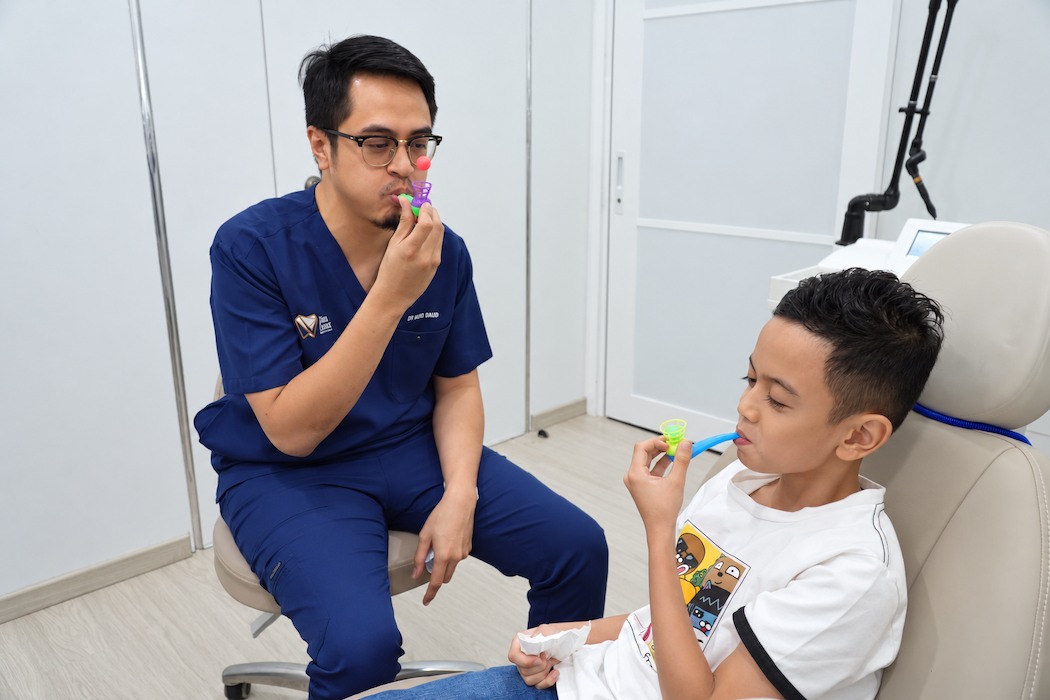
Children may be guided through age-appropriate exercises and activities that help improve awareness, coordination and function of the tongue, lips, cheeks and jaw, as well as breathing patterns.

There is no single programme that suits every child.
Exercises are selected according to what is found during the assessment and adapted to the child’s age, ability and stage of development.
And just like other forms of therapy, progress requires practice. Parental participation and consistency at home are an important part of the process.
Depending on the child’s individual needs, a care plan may also involve habit correction, dental or orthodontic management or collaboration with other healthcare professionals.
Where structural restrictions are identified, these are considered alongside the child’s overall function rather than viewed in isolation.
A Simple “Watch Your Child” Checklist
You do not need to inspect every movement your child makes or assume that one habit means there is a problem.
Instead, pay attention to patterns, particularly when several concerns seem to occur together.
Here are a few things you can casually observe:
During sleep:
Does your child regularly sleep with their mouth open, snore or seem restless?
During meals:
Are they picky eaters? Do they have more preference towards crispy or crunchy foods? Do they often gag with certain food? Are they mostly pocketing food or swallowing food without even chewing
While talking:
Are they late talkers? Do they often shorten their words? Is the speech unclear? Are there obvious lisp?
At rest:
Is the mouth open? Do they snore or have noisy breathing? Are they sleeping in abnormal awkward position? Are the teeth grinding?
During the day:
Does your child mostly breathe through their nose or tend to rely on mouth breathing?
None of these observations on their own provides a diagnosis.
But if you are noticing several persistent patterns, an early assessment can help you understand what may be happening and whether any further support is needed.
Understand First, Treat Second
When something about our child’s development worries us, it is tempting to search for one clear explanation.
Oral function is rarely that simple.
Breathing, sleep, eating, speech, oral habits, muscle coordination and dental development can overlap in different ways for different children. That is why the first step should be understanding how the child is functioning as a whole, rather than rushing towards a particular treatment.
Sometimes, the small things parents notice every day can provide the most useful starting point.
If you have concerns about your child’s breathing, chewing, swallowing, tongue posture, speech-related oral function or other oral habits, Medikalevant | Dentalevant TT Clinic offers Peadiatric Oral Function Assessment & Myofunctional Therapy to help parents better understand their child’s individual needs.
Learn more or enquire about an assessment here.