




By lunchtime, your child’s preschool session is over. Your working day still has several hours to go.
There is a pick-up to arrange, an afternoon to organise and a familiar worry somewhere between meetings: is my child getting the attention and opportunities they need?
Then comes another question. Would full-day preschool feel like too much, too soon?
For many working parents, the answer means weighing up the support they already have. Grandparents, relatives and domestic helpers can be invaluable, although regular opportunities for guided learning, enrichment and time with other children may be harder to arrange.
When the Family Timetable Needs More Support
Trying to fit those opportunities around family life can add another layer to an already busy week. Reading practice gets pushed into the evening, enrichment means another journey, and worries about whether your child is getting enough support can linger in the background.
For families navigating this, a half-day arrangement may leave a gap between preschool ending and the working day finishing. A thoughtfully planned full-day programme can help bridge that gap while giving children more time to learn, play and settle into a familiar routine.
Importantly, a longer day does not mean children are expected to be learning from morning to evening. A well-balanced programme includes guided activities alongside meals, rest, free play and quieter moments, giving children time to recharge between more structured parts of the day.
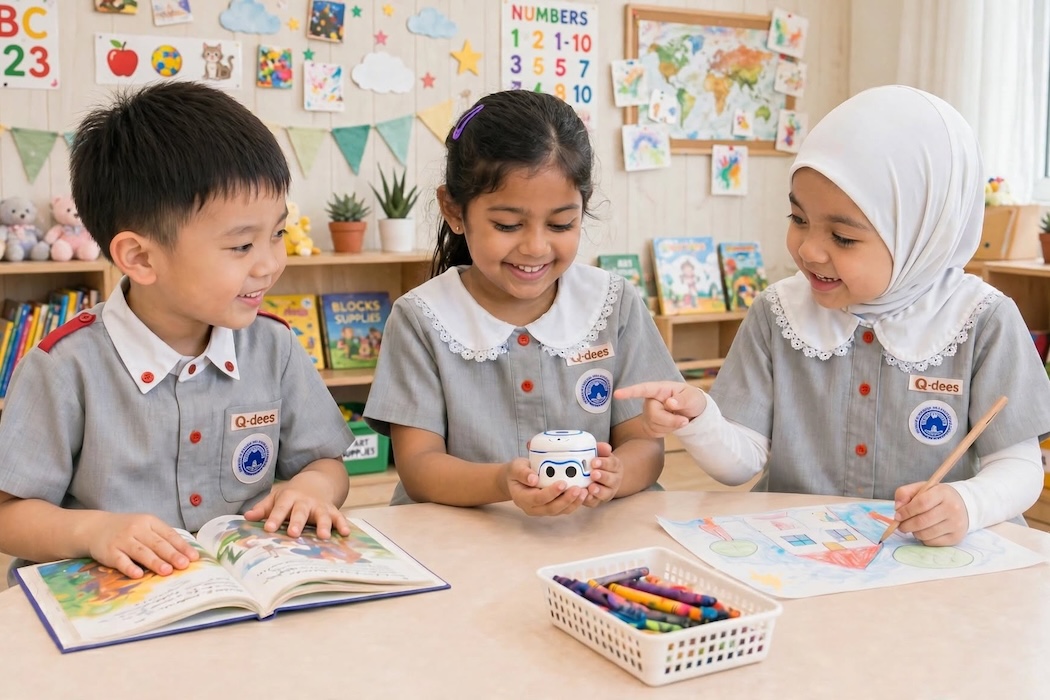
At Q-dees, the full-day programme combines extended care with guided learning, individual support and opportunities for children to interact and grow alongside their peers. This balance helps make the day feel varied and manageable, rather than simply longer.

A Day with Room for Different Discoveries
Children’s enthusiasm often appears in wonderfully specific ways: remembering every action to a song, asking to repeat an experiment or proudly explaining something they have made.
Having more time in the day gives those interests room to develop.
Through Q-dees’ Link and Think Methodology, children learn using stories, original songs, role model characters and interactive materials designed to make new concepts easier to understand. They can explore mathematical ideas using the hands-on Mathsboard and investigate through STEM activities.
Music, drama, art and Gym FlexTM add opportunities for creativity and movement, while character building and social skills support children as they learn to participate, communicate and build relationships with others.
Preparing for a Changing World Through Play
Naturally, parents are also thinking about what comes next. With families now having the option of Year 1 entry for the six-year-old cohort from 2027, parents may be thinking more carefully about their child’s readiness for primary school.
But being ready for school is not only about knowing letters and numbers. It also involves communicating, following instructions, solving problems and approaching unfamiliar tasks with confidence.
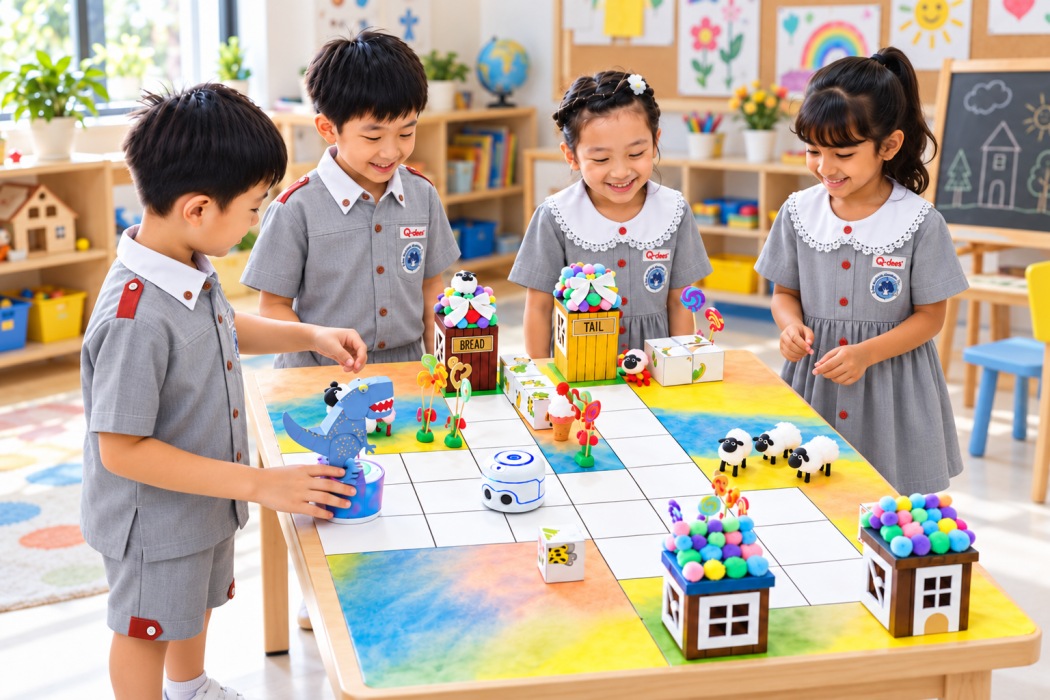
Q-dees’ Robotics ‘n Coding programme introduces children to block coding through concepts such as sequencing, loops and algorithms. When a child gives a robot an instruction and sees it respond, an abstract idea suddenly becomes something they can see and experiment with.
Activities like these encourage logical thinking and problem-solving, skills that are becoming increasingly relevant in a digital and AI-driven world. For young children, however, the learning can feel much simpler: figuring out how something works, trying again and enjoying the satisfaction of getting it right.
Language Learning That Fits Your Family’s Plans
For parents considering Chinese primary school, Mandarin can be a particular concern, especially when it is not regularly spoken at home.
Q-dees’ Mandarin Medium Immersion programme caters to children from both Mandarin-speaking and non-Mandarin-speaking backgrounds, giving them opportunities to become more familiar and comfortable with the language.
Islamic studies, including Jawi and Iqra, are also available for Muslim students. Having these learning options within the preschool day can make family schedules simpler while supporting different educational priorities.
A Little More Time for Individual Attention
Not every child learns something the first time around. Some need another explanation. Others may benefit from reading with someone who can listen closely and guide them through unfamiliar words.
Q-dees’ full-day offering includes remedial coaching, homework coaching and one-to-one reading, giving children additional time to revisit what they are learning with guidance.
For parents, that can also mean less pressure to squeeze everything into the hours between coming home, dinner and bedtime.
Recognised as Best Full-Day Preschool Programme (Chain) at the Parents’ Choice Awards 2026, Q-dees brings these different parts of the day together with working families in mind.
And perhaps that is what makes a longer preschool day feel less like simply “more hours” and more like more room to grow: time to learn, play, ask questions, make friends and receive help when it is needed.
By the time you meet again at pick-up, there may even be a new song, story or discovery they cannot wait to share with you.
See how Q-dees’ full-day preschool programme could fit into your child’s day and your family’s routine. Visit www.q-dees.com to find your nearest centre and enquire about its full-day schedule and available programmes.