






Dr Wilson Pau, Consultant Paediatrician and Paediatric Infectious Disease Consultant
It’s World Immunisation Week! Celebrated every year in the last week of April, it’s a dedicated week that aims to promote the use of vaccines to protect people of all ages against disease. While the world celebrates the availability of COVID-19 vaccines, we need to ensure other life-saving vaccinations are not overlooked.
In a recent interview with Dr Wilson Pau, Consultant Paediatrician and Paediatric Infectious Disease Consultant at KPJ Seremban Specialist Hospital, we spoke about how Japanese Encephalitis (JE) is one of the most overlooked yet deadly disease that is actually preventable with a vaccine.
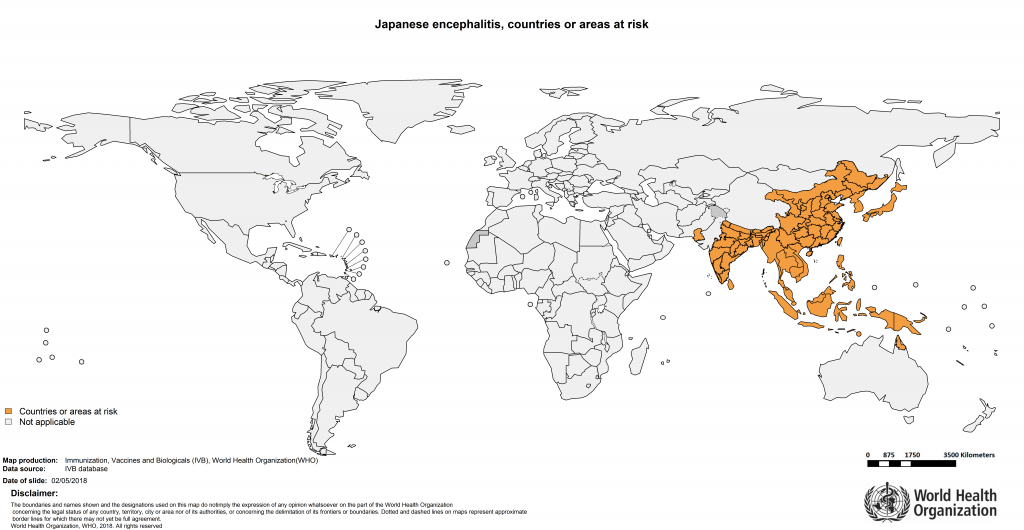
Countries at risk for JE
What is Japanese Encephalitis (JE)?
Japanese Encephalitis (JE) is a deadly disease in tropical and subtropical countries like Malaysia. It is often out of sight and out of mind, but can lead to life-long effects on children including long-term neurologic, psychiatric, or cognitive problems. It’s quite similar to Dengue where the Japanese Encephalitis virus spreads via the bites of infected mosquitoes, but with a higher disease severity once infected. Over the years, the infection had occured in different parts of our country causing diseases mainly in children as well as in adults.
“Although the number of cases for JE infection is not as high as compared to Dengue infections, the SEVERITY of JE infections are much higher and more deadly.” – Dr Wilson Pau
Japanese Encephalitis is a zoonosis – an animal disease that can spread to humans and is primarily transmitted by evening biting Culex mosquitoes (mainly Culex tritaeniorhynchus) that feed on infected birds, pigs and other mammals, which could then pass the infection to people who are visiting, living or working in rural areas and even people who go jungle trekking or any outdoor activities. Even urban dwelling mosquitos like Aedes and Mansonia spp can carry the JE Virus.
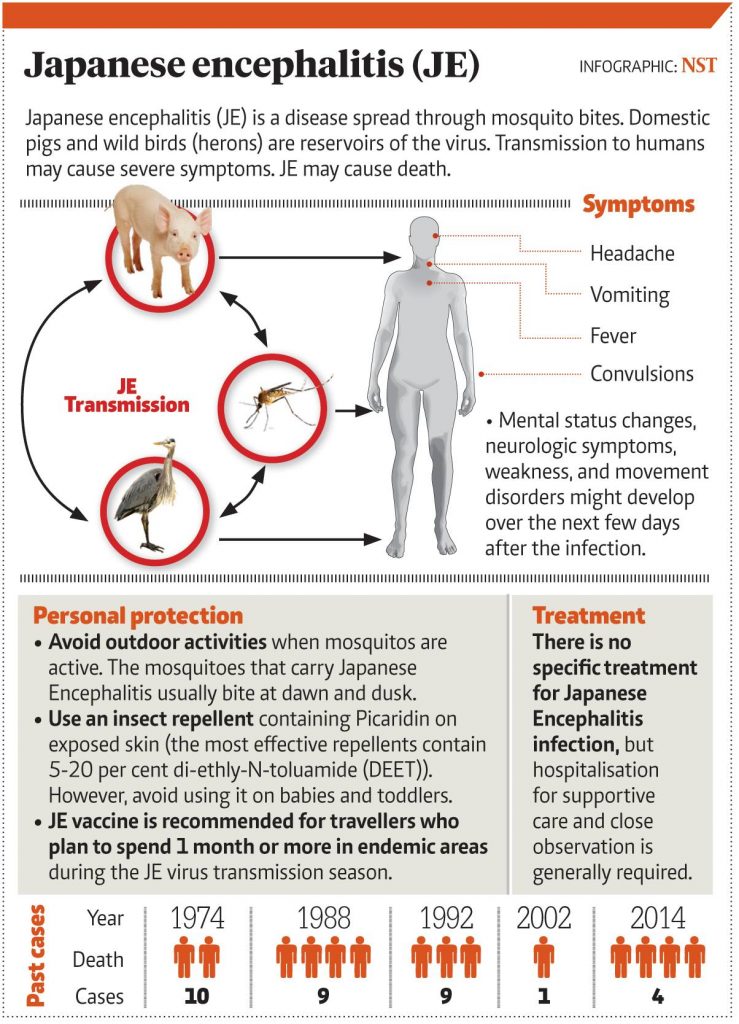
Source: NST Online
Symptoms of Japanese Encephalitis (JE)
According to Dr Wilson Pau, symptoms of JE can be categorised into 3 different categories:
- Asymptomatic – No symptoms exhibited
- Mild symptoms – Symptoms include fever, severe headache, vomiting, diarrhoea, and general weakness.
- Moderate to severe symptoms – Which may include tremors, seizures (especially children), expressionless face, and sudden paralysis which can affect the respiratory system and cause bladder retention problems.
The severity of the symptoms depends on a person’s immune system. But the fact is, about ⅓ of people who are infected with Japanese Encephalitis (JE) virus might die, while ½ who survived will have a permanent neurological deficit like cerebral palsy – which is a very high number. Many survivors continue to have long-term neurologic, psychiatric, or cognitive problems which leave them and the family to suffer for life.
There is no cure for JE
There is basically no cure or antiviral treatment for Japanese Encephalitis Virus infection up till now. The main stay of treatment for those infected is by providing supporting and symptomatic treatment during the infection and hence the reason why prevention is of utmost importance.
So how can we prevent our children from getting Japanese Encephalitis (JE)?
One of the ways to prevent JE is to protect them from mosquito bites. These include using insect repellent, wearing long-sleeved shirts and pants, and also using mosquito netting while staying outdoors to prevent being bitten by mosquitoes.

Dr Wilson Pau also advises that the next best method of preventing JE infection is to get your children vaccinated. He says that the current JE vaccine is safe for children 9-month-old onwards.
“Sarawak is the only state in Malaysia that is conducting a national immunisation programme, where children are given the JE vaccine at 9-months-old and 21-months-old. For other states, we recommend taking the first vaccine dose between 9 – 12 months old and the second dose one year after that,” says Dr Wilson.
These 2 doses of JE Vaccine are sufficient to last you a lifetime unless one undergoes certain treatments or is on any medication that may wipe out the white blood memory cells.
Prevention is Best
No matter where we are or in what situation we’re in, prevention is better than cure. Get your children vaccinated against Japanese Encephalitis (JE) before it is too late – because even though it may be a disease that we hardly hear about, it is still around and is deadly.
So the next time you see your child’s paediatrician, ask about the JE vaccine and get your child protected. Better to be safe than sorry Mummies and Daddies!