





“Five more minutes!”
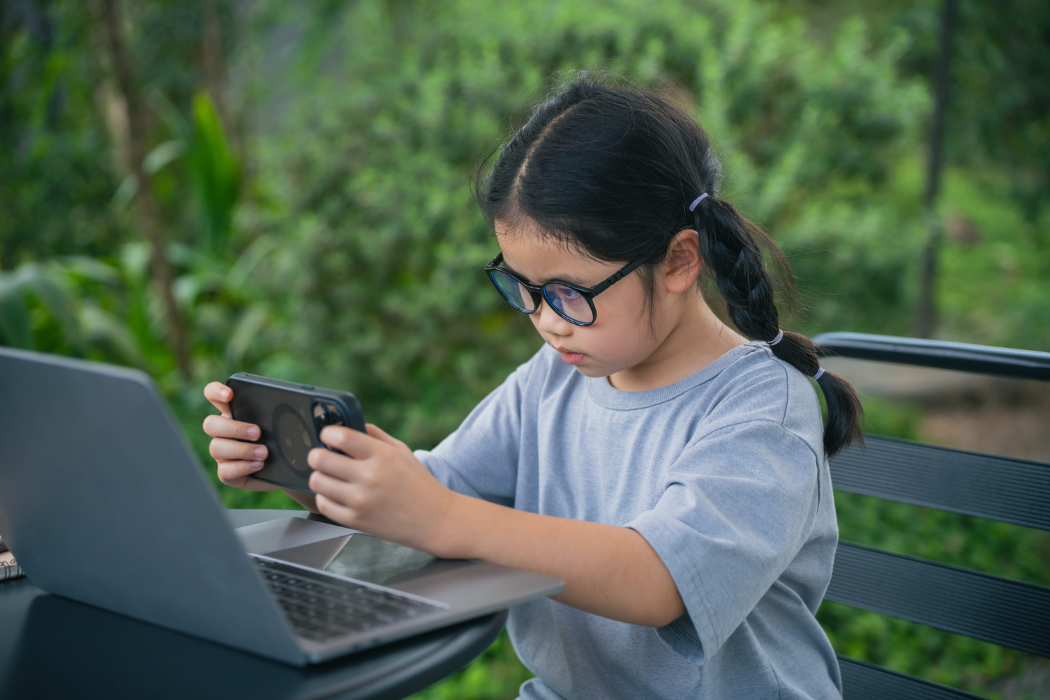
It is a phrase heard in homes everywhere. Five more minutes of YouTube. One more round of a game. Just one last video before bed.
For many parents, screen time has become one of modern parenting’s most exhausting battles. Between schoolwork, educational apps, messaging, entertainment and the occasional desperate need for 20 minutes of peace while dinner is being prepared, screens are woven into family life in ways that would have been difficult to imagine just a generation ago.
Here is the thing worth knowing before the guilt takes over: what is happening to your child’s eyes during that screen time is a physical process, not a parenting failure.
The Biology Behind the Screen
Children’s eyes are still actively growing and developing. When a child spends prolonged periods focusing on something close to their face, regardless of whether it is a tablet, a smartphone, or a book, the eye muscles work continuously to maintain that sharp focus.
Over time, this intense near-work triggers a physical response. The eyeball can gradually elongate from front to back. When the eye stretches even slightly longer than normal, distant objects start to look blurry. This elongation is the root cause of myopia, commonly known as short-sightedness.
Because childhood myopia often progresses rapidly during early school years, what begins as minor blurriness can develop into higher prescriptions later in life.
The School Vision Test Misconception
Many parents feel reassured when their child easily reads letters off a simple chart at school or during a routine checkup. Passing a basic distance vision test is a great milestone, but it does not tell the full story.
- Limited scope: A standard chart reading checks how clearly a child can see across a room at one specific moment.
- Hidden muscle effort: It does not measure how hard their eyes are working to stay focused during a long school day.
- Lack of structural tracking: It does not assess eye teaming while reading, nor does it evaluate the structural length of the eyeball where myopia progression begins.
A child can pass a basic screen with flying colours while quietly accommodating vision fatigue, subtle focus shifts, or early eye elongation. Unnoticed, these tiny strains can eventually show up as unexplained headaches, a drop in reading endurance, or a sudden loss of confidence in the classroom.
Looking at the Whole Picture: A Modern Eye Care Strategy
A child may spend several hours looking at something close to their eyes without anyone giving it much thought. Building regular breaks and outdoor time into a child’s routine can support healthier visual habits. It also gives their eyes opportunities to focus beyond the distance of a screen, book or worksheet.
In addition to that, a thorough eye assessment is also equally important. Comprehensive eye examinations evaluate the physical health of the eye, track exact structural changes, and assess how daily habits influence vision.
When you understand the underlying mechanics of your child’s eye growth, early intervention allows you to manage short-sightedness proactively rather than constantly reacting to stronger prescription updates.
Because visual needs vary across every age group, eye care works best when integrated across the entire family:
- Children: Proactive tracking of eye growth and myopia risk assessments.
- Working Adults: Targeted support for digital eye strain and progressive vision requirements.
- Seniors: Regular eye health screenings to monitor age-related visual changes.
A Thoughtful Approach to Family Eye Health
A comprehensive children’s eye assessment focuses on how the eyes focus together, how they respond to near and distance tasks, and whether there are early signs of myopia progression that a standard screening would miss entirely.
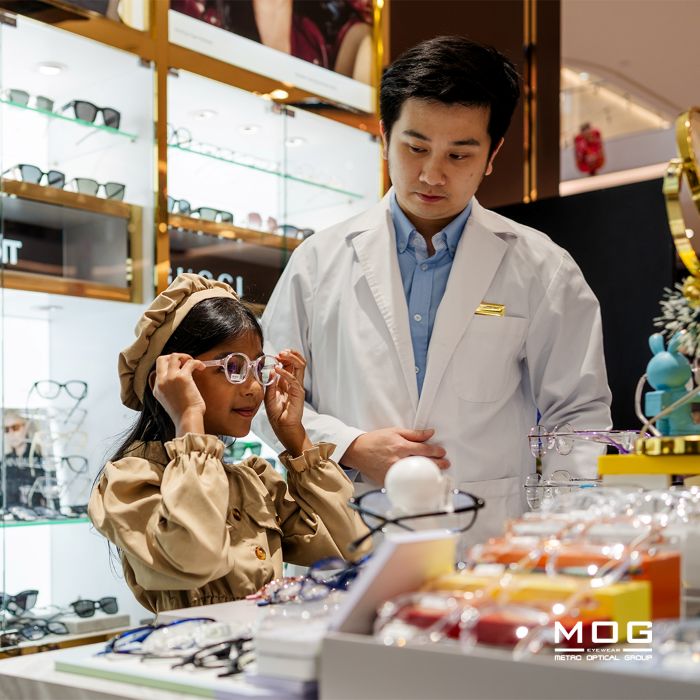
At MOG, this sits within their Children’s Myopia Management Programme, part of their wider 6-in-1 Vision Experience, which is built around the understanding that every family member’s eyes carry a different story.
MOG combines myopia risk assessments, tailored management solutions, and continuous follow-up care under one roof. By monitoring your child’s eye growth early, MOG helps protect their vision for all the bright tomorrows ahead.
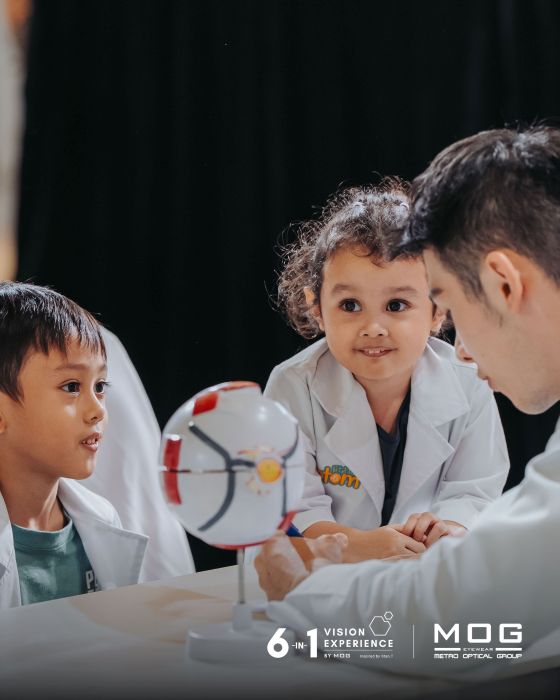
A child whose myopia is identified and monitored early tends to have more options and a steadier path ahead than one whose vision issues go unnoticed for years. For parents already carrying enough guilt about screens, that clarity can be a relief in itself.
None of this requires overhauling your household overnight or banning devices altogether. It starts with a single, unhurried assessment that tells you exactly where your child’s eyes stand today.
MOG’s optometrists offer a comprehensive vision assessment designed around your child’s specific needs, not a generic chart reading. Book a session for your family here.